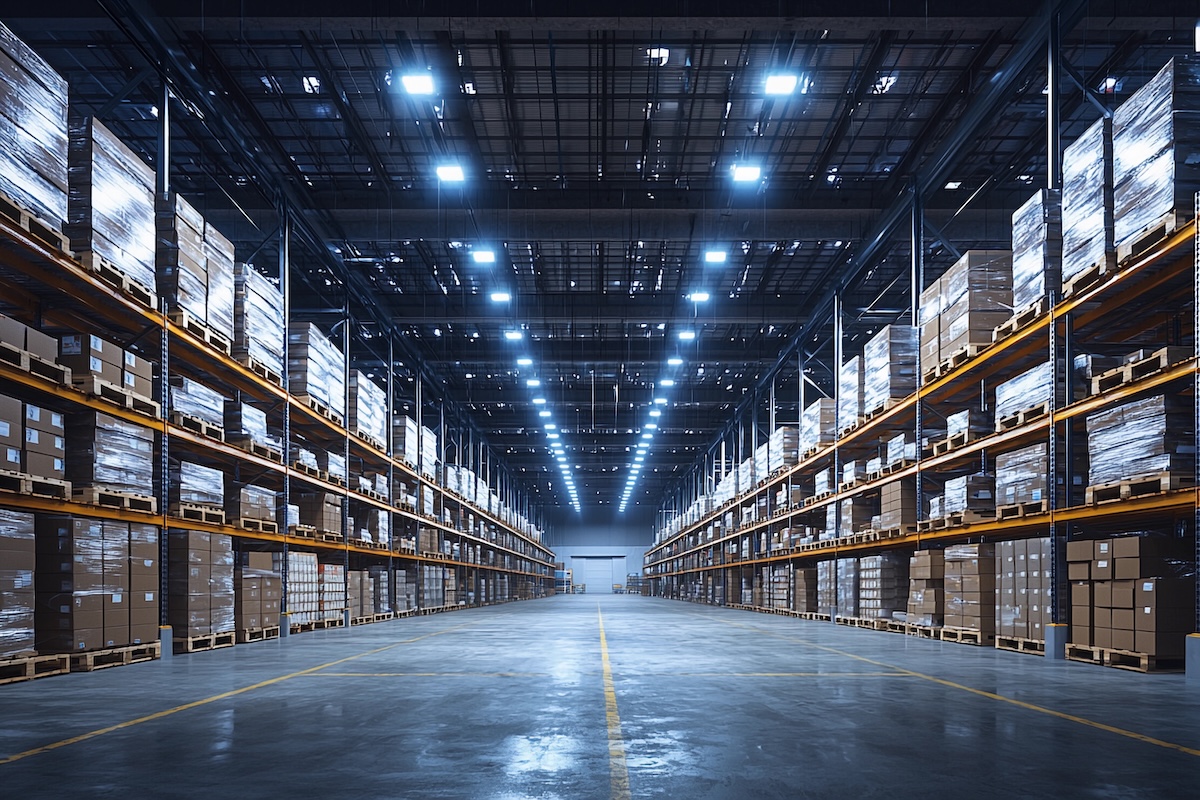
Modern warehouses are sprawling, fast-paced environments that demand precision, efficiency, and safety. Whether it’s managing complex logistics, reducing overhead costs, or improving employee working conditions, lighting plays a critical role in overall warehouse performance. That’s where LED warehouse lighting steps in as a game-changing solution.
From energy savings and enhanced visibility to improved safety and long-term sustainability, LED lighting systems are rapidly becoming the industry standard for warehouse environments. This guide explores the full scope of LED warehouse lighting — including its advantages, technology, and design considerations — to help warehouse owners and facility managers make informed decisions.
What is LED Warehouse Lighting?
LED warehouse lighting refers to the use of LED (Light Emitting Diode) technology to illuminate industrial and storage spaces, including distribution centers, fulfillment hubs, and storage facilities. Unlike traditional lighting technologies such as metal halide, fluorescent, or high-pressure sodium, LED fixtures are highly energy-efficient, long-lasting, and adaptable to the needs of modern warehouse operations.
These systems are designed to deliver bright, uniform light across vast spaces, including high ceilings, loading docks, aisleways, and shelving areas — all without the warm-up times, flickering, or high maintenance costs of older technologies.
Core Benefits of LED Lighting in Warehouses
1. Energy Efficiency & Cost Savings
LEDs convert a much higher percentage of electricity into visible light — up to 80% more efficiently than traditional systems. This translates into:
-
Lower electricity bills (up to 50-70% savings)
-
Reduced carbon footprint
-
Faster return on investment (ROI), often within 12–24 months
2. Longevity & Low Maintenance
A quality LED warehouse fixture can last between 50,000 to 100,000 hours — significantly longer than metal halide or fluorescent lamps. With fewer bulb replacements and minimal maintenance required, warehouses experience:
-
Less operational downtime
-
Lower labor and maintenance costs
-
Reduced replacement expenses
3. Superior Visibility for Safer Operations
Warehouse environments are full of activity — from forklift traffic and pallet stacking to inventory picking and packaging. Proper lighting is essential for safety and productivity.
LED warehouse lighting improves visibility by providing:
-
Uniform beam distribution with fewer shadows
-
Reduced glare, improving visual comfort
-
Enhanced color contrast, aiding in identification of items, labels, and hazards
4. Instant On/Off and Smart Controls
Unlike traditional lights that take minutes to warm up, LEDs offer instant full illumination. They also integrate seamlessly with:
-
Occupancy sensors (lights only when needed)
-
Daylight harvesting systems
-
Dimming controls and smart automation
These controls contribute to further energy savings and allow facility managers to customize lighting for specific zones or tasks.
Design Considerations for LED Warehouse Lighting
Designing an effective lighting plan for a warehouse involves more than just installing a few bright fixtures. Consider these factors:
1. Ceiling Height and Fixture Placement
High-bay LED fixtures are ideal for spaces with ceilings above 20 feet. They provide a wide beam spread and high lumen output for tall spaces. Low-bay fixtures are used for ceilings under 20 feet.
Proper placement ensures:
-
No dark spots or overlit zones
-
Balanced lighting across racking systems and floor space
-
Compliance with OSHA lighting standards
2. Beam Uniformity
Uniform light distribution helps reduce eye strain and fatigue. LED fixtures can be equipped with optics or reflectors to spread light evenly, reducing contrasts between bright and dim areas — especially important in long aisleways and rack systems.
3. Color Temperature and CRI
Color Temperature (measured in Kelvin):
-
4000K–5000K is typically ideal for warehouses — bright, neutral white light that mimics daylight.
Color Rendering Index (CRI):
-
A CRI of 80+ is considered good; 90+ is excellent.
-
Higher CRI improves visibility, safety, and color accuracy in tasks like picking and sorting.
Durability and Environmental Resilience
Warehouse environments can be tough — exposure to dust, moisture, extreme temperatures, and vibrations. LED warehouse lighting fixtures are built for durability:
-
IP-rated for dust and water resistance
-
Shock and vibration resistant
-
Operable in temperatures ranging from -40°F to 130°F
These features make LEDs a perfect fit for demanding industrial conditions.
Smart Lighting Integration
The future of LED warehouse lighting includes full integration with building management systems (BMS), offering:
-
Real-time energy usage monitoring
-
Predictive maintenance alerts
-
Automated light schedules based on occupancy or time-of-day
Warehouses that adopt smart LED systems can reduce lighting-related energy costs by an additional 20–30%.
Comparing LED vs. Traditional Warehouse Lighting
When comparing LED warehouse lighting to traditional lighting systems like metal halide, high-pressure sodium (HPS), and fluorescent fixtures, the differences are significant in nearly every category. LEDs offer far greater energy efficiency, often using 50–70% less electricity to produce the same—or even better—illumination. Traditional lighting technologies also tend to have much shorter lifespans, typically lasting between 10,000 to 20,000 hours, while LEDs can operate for 50,000 hours or more. This extended lifespan translates to less frequent maintenance, fewer disruptions to warehouse operations, and lower long-term costs. Additionally, LEDs provide instant illumination with no warm-up time, making them ideal for warehouses with occupancy sensors or areas that need quick lighting response.
| Feature | LED Lighting | Metal Halide / Fluorescent |
|---|---|---|
| Energy Efficiency | High (up to 150 lm/W) | Low (60-90 lm/W) |
| Lifespan | 50,000–100,000 hrs | 10,000–20,000 hrs |
| Warm-up Time | Instant | 5–15 minutes |
| Maintenance Needs | Minimal | Frequent |
| Color Rendering | 80+ CRI | 60–70 CRI |
| Dimming Capabilities | Yes | Limited |
| Environmental Impact | Mercury-free, recyclable | Often includes mercury and hazardous materials |
Another major advantage of LED fixtures is their superior light quality. With higher Color Rendering Index (CRI) values and better color temperature consistency, LED lights allow workers to see more clearly, identify labels and products accurately, and improve overall safety in the workspace. Traditional lighting often produces uneven illumination, flickering, and noticeable shifts in color temperature over time—all of which can cause visual fatigue and reduce productivity. LED warehouse lighting delivers uniform beam distribution, reduces shadows between aisles and shelves, and maintains consistent performance even in challenging conditions, making it the superior choice for modern warehouse environments.
Retrofitting vs. New Installation
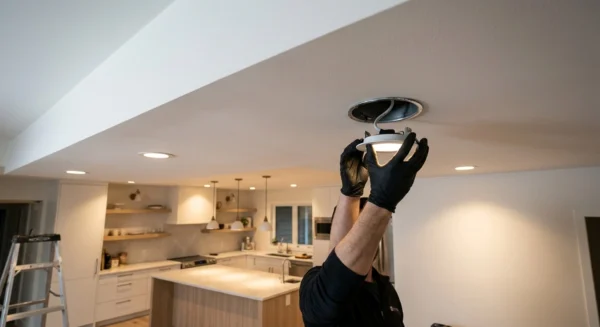
When it comes to implementing LED warehouse lighting, decision-makers often weigh the pros and cons of retrofitting existing fixtures versus starting fresh with a new installation. Retrofitting involves upgrading current lighting systems—such as metal halide or fluorescent fixtures—with compatible LED components. This approach is typically faster, less disruptive, and more cost-effective upfront since it uses the existing infrastructure. For warehouses operating on a tight budget or with minimal downtime windows, retrofitting can be an efficient way to achieve improved lighting performance, energy savings, and lower maintenance without a complete overhaul.
On the other hand, a new LED lighting installation offers the opportunity to fully optimize the layout, fixture types, and controls for maximum performance. This approach allows for better fixture placement, advanced control systems like motion sensors or daylight harvesting, and customized beam angles to address specific tasks or storage layouts. Although it involves a higher initial investment, a new installation often delivers greater long-term value through enhanced energy efficiency, safety, and employee productivity. For warehouses undergoing major renovations, expansions, or new construction, a full LED installation is typically the preferred route to future-proof the facility and take full advantage of modern lighting technology.
-
Retrofitting: Upgrading existing fixtures with LED technology is cost-effective and quick. Many LED retrofit kits are compatible with standard sockets and wiring.
-
New Installations: Offers maximum flexibility in layout, fixture type, and smart controls. New builds can integrate high-efficiency LED systems from the start.
Why Choose LED Warehouse Lighting?
As the demands on logistics, storage, and supply chains continue to increase, so does the need for efficient, effective warehouse lighting. LED warehouse lighting offers a future-proof solution that reduces operating costs, boosts worker productivity, and promotes a safer working environment.
By selecting high-quality LED fixtures and designing a tailored lighting layout, warehouse operators can transform their spaces into efficient, well-lit, and energy-smart facilities that support long-term success.
If you’re planning a warehouse lighting upgrade or starting a new facility, investing in LED lighting is not just a smart move — it’s essential for staying competitive in today’s fast-paced industrial world.