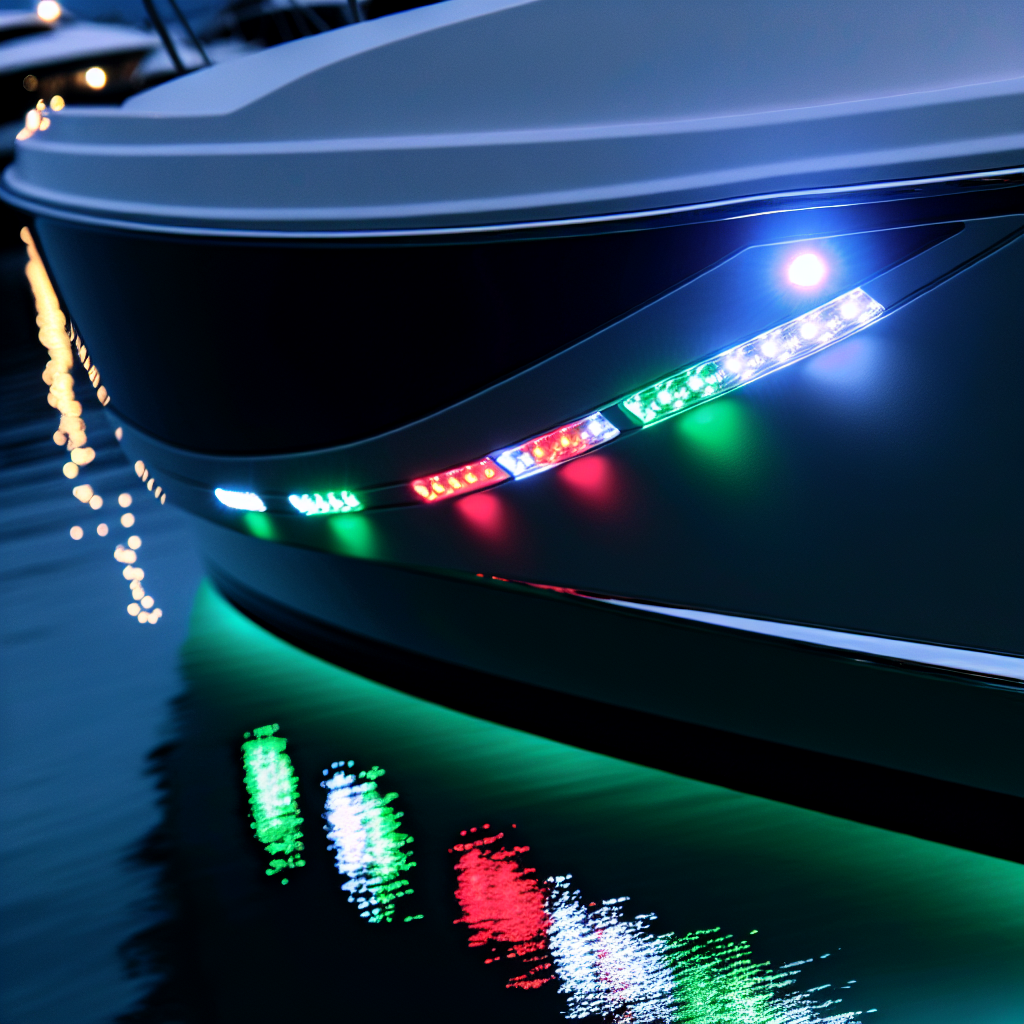
Having the right LED boat navigation lights is essential for marine safety, style, and energy efficiency. Whether you’re cruising through foggy pre-dawn waters, moored near a marina at night, or upgrading your vessel’s lighting setup, these lights serve a dual purpose: they help prevent collisions and enhance your boat’s appearance. Luckily, modern LED technology offers long-lasting, low-power solutions tailored to meet both recreational and regulatory needs. From U.S. Coast Guard compliance to fixture design and smart features, choosing the proper LED navigation lights makes a measurable difference on the water.
Why LED Boat Navigation Lights Are the Best Choice
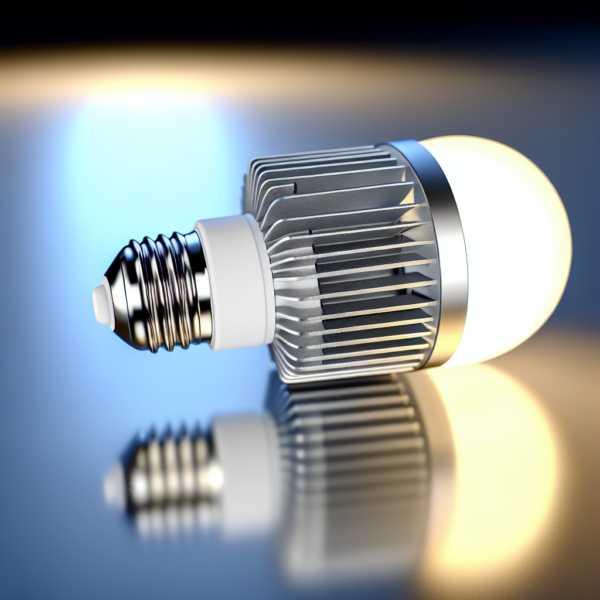
Outdated incandescent and halogen lights are steadily being phased out in favor of more efficient LED boat navigation lights. One key reason is energy consumption. LED fixtures typically use just 1 to 3 watts while producing the same 200 to 400 lumens you’d expect from 10- to 20-watt incandescent bulbs. That power savings significantly extends battery life — a major advantage during long overnight trips or if you’re running a solar-charged setup.
LEDs are also built for durability. Marine-rated models resist saltwater corrosion, UV exposure, and mechanical shock. Unlike traditional bulbs with filaments that break easily, LEDs withstand high-motion environments like choppy seas. With average lifespans of 25,000 to 50,000 hours, they drastically reduce replacement frequency and ongoing maintenance. Plus, their compact size enables modern, low-profile designs that blend cleanly into today’s boat layouts.
Required Types of LED Navigation Lights
To stay compliant with U.S. Coast Guard and ABYC regulations, boats must display specific navigation lighting configurations based on size, use, and operating conditions. These required LED boat navigation lights include:
- Sidelights: Red (port) and green (starboard) lights visible over a 112.5° arc on each side. These indicate a vessel’s direction underway.
- Stern Light: A rear-facing white light visible over a 135° arc. It signals the rear of a boat to other vessels.
- Masthead Light: A forward-facing white light visible over 225° from the top-center of powered boats under way.
- All-Round Light: A 360° white light often used on smaller vessels in place of both masthead and stern lights.
- Anchor Light: A white 360° light required when anchored between sunset and sunrise or during limited visibility.
LED fixtures must meet intensity, color, and beam angle specifications to be considered legal. Always verify certifications like NMMA, ABYC A-16, or COLREGS compliance to ensure your setup is seaworthy — especially for lights visible up to 2 or 3 nautical miles, depending on vessel type.
Brightness and Color Temperature Considerations
Navigation light colors — red, green, and white — are standardized across international waters. However, interior marine lighting allows for customization. For ambient or utility LEDs, choose a color temperature that fits the space: 2700K for warm tones inside cabins or 5000K for cool, task-focused illumination in galleys and engine rooms.
Authorized navigation lights must also meet specific brightness requirements. For instance, a green sidelight may emit 350 lumens but only within a narrow 112.5° forward-facing arc. Opt for lights with integrated optics or lenses that focus the beam efficiently and include visibility ratings like “visible at 2 NM.” These specs ensure your lights meet both style and safety demands.
Mounting Styles: Flush, Surface, and Pole Mount
Mounting style affects performance, aesthetics, and installation complexity. Understanding your options will help optimize your lighting layout:
- Flush Mount: Integrated into the boat’s hull or superstructure, flush-mounted lights reduce drag and offer a sleek, clean look. They’re ideal for performance yachts but require precision during installation.
- Surface Mount: Easier to retrofit, surface-mounted lights are common on center consoles and pontoons. They typically feature sealed designs that are IP67 or higher for waterproofing.
- Pole Mount: Used for masthead or all-around lights, pole mounts elevate the light source to maintain proper visibility over deck hardware and enclosures. Many models are telescopic or removable for storage.
For safety and durability, use marine-grade tinned copper wire, heat-shrink connectors, and nylon cable clamps. Upgrading to a digital lighting control system allows centralized switching or smart control via mobile apps — ideal for vessels with comprehensive electrical systems.
Smart Innovations in LED Marine Lighting
The latest LED boat navigation lights include intelligent features that boost safety and convenience. Automatic dusk-to-dawn sensors simplify lighting management for docked vessels. RGBW color-changing LEDs offer custom lighting scenes — useful for cockpit ambient lighting or entertaining guests at night.
Bluetooth-controlled systems from leading brands like Shadow-Caster and Lumitec let users adjust brightness, patterns, and colors directly from smartphones. Some models even interface with NMEA 2000 networks, enabling automated responses like switching from anchor mode to underway lighting as soon as the engine starts. Integrated strobes or alarms can also activate for man-overboard events or other onboard emergencies.
Top Brands and Budget Tips
Not all LED lights are created equal. Reputable manufacturers like Perko, Attwood, Hella Marine, Aqua Signal, and Lumitec offer certified fixtures engineered for harsh onboard environments. Expect basic LED sidelight sets to cost $30–$70, while advanced models with smart features may range from $150–$250 depending on mount type and connectivity.
Though costs are higher upfront, you’ll save long-term thanks to reduced power draw and minimal maintenance. For example, a 3-watt LED anchor light conserves battery charge and minimizes generator use overnight. Factor in professional installation fees — typically $75–$125 per hour — if you’re integrating lights with helm controls or digital switching systems.
Always verify voltage compatibility. Most boats run on 12V or 24V systems, and premium LED fixtures often support wide inputs (e.g., 9V–30V) to protect against fluctuations. Choose IP67 or IP68 waterproof-rated hardware and make sure all lights are designed specifically for saltwater environments to avoid corrosion and fogged lenses.
Combining Style and Safety with LED Marine Lights
Beyond meeting maritime visibility laws, LED boat navigation lights offer opportunities to enhance your boat’s look and usability. For a stealthy aesthetic, install recessed hull lighting or under-swim platform LEDs. Dual-color or dimmable cockpit lights — such as those switching between white and blue or red — support both ambience and night vision during extended cruises.
Below-deck, LED strip lighting can highlight staircases, cabinets, and galleries. Use soft-glow lighting with motion sensors in storage areas or engine compartments to maximize functionality without wasting power. Smart integration or remote-controlled zones further streamlines onboard lighting for any adventure.
Optimize Your Marine Lighting for Performance and Peace of Mind
Every vessel benefits from efficient, compliant, and stylish LED boat navigation lights. Whether you’re equipping a modest skiff or upgrading a high-end cruiser, selecting the right lights ensures you stay visible, conserve battery power, and add modern flair. Focus on certified products, install them correctly, and consider smart features for added safety and control. The result is a safer, sleeker boating experience that shines long after the sun goes down.