The oil and gas industry is turning to LED lighting not just as a modern upgrade—but as a strategic investment. In an era marked by volatile energy prices, environmental scrutiny, and increasing operational demands, oil and gas companies are adopting LED industrial lighting fixtures to improve efficiency, safety, and long-term profitability.
While energy production remains one of the world’s most capital-intensive sectors, the adoption of LEDs is proving to be a high-impact move that addresses multiple pain points across upstream, midstream, and downstream operations.
Cost Control in a Margin-Sensitive Industry
Despite the perception of high profitability, many oil and gas operations operate on narrow margins. Operating costs—especially in remote or offshore facilities—add up quickly, and energy consumption from lighting can represent a significant share of those costs.
That’s one reason why the oil and gas industry is turning to LED lighting. Modern LED fixtures reduce electricity consumption by up to 50% or more compared to legacy metal halide or high-pressure sodium systems. And because LEDs can operate for 50,000 hours or longer, companies enjoy dramatically lower maintenance expenses, especially in hard-to-access areas like offshore rigs or refinery towers.
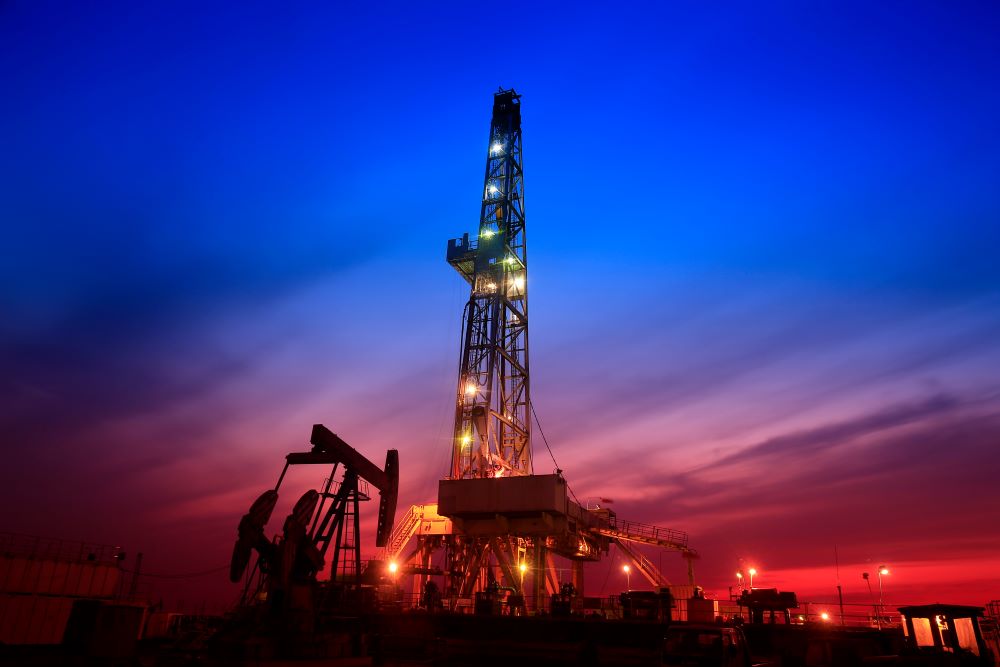
Unlike conventional bulbs that may break or degrade in the face of shock, vibration, or extreme temperatures, LED fixtures are built for durability. Their rugged design is particularly suited to the harsh conditions typical of drilling platforms, compressor stations, and pipeline terminals.
Moreover, the shift to LED supports broader ESG goals. Lower energy consumption means reduced greenhouse gas emissions and a smaller carbon footprint. And when LED fixtures reach the end of their lifespan, they are generally recyclable and free of hazardous materials, unlike mercury-laden fluorescent lamps.
Improved Visibility and Productivity
Lighting plays a pivotal role in how effectively a facility operates—especially when it comes to safety, inspections, and task performance. In dimly lit or poorly designed environments, workers are more prone to errors or injuries.
LEDs offer a solution with their superior light quality and precision optics. Unlike older technologies that cast uneven beams or produce harsh glare, LED lighting provides uniform illumination with fewer shadows and hot spots. Workers benefit from:
-
Enhanced visibility of gauges, valves, and safety signs
-
Better color recognition, critical for wiring, chemical identification, and leak detection
-
Tunable light temperatures that reduce eye strain and fatigue during long shifts
By reducing visual strain and creating a more comfortable working environment, LEDs contribute to higher productivity and improved morale across the site.
Safety in Hazardous Class I Environments
Perhaps the most critical reason the oil and gas industry is turning to LED lighting is safety.
Many facilities in this sector fall under Class I hazardous location classifications, where flammable gases or vapors may be present. Traditional lighting fixtures can pose a serious ignition risk if not properly contained or if they fail under stress.
LEDs, by design, operate at lower surface temperatures and generate minimal heat. They are also solid-state, meaning they are far less likely to shatter or spark when damaged. Specialized LED hazardous location fixtures are built with explosion-proof housings and corrosion-resistant materials to meet OSHA, NEC, and IECEx standards for use in volatile zones.
In the event of impact, vibration, or exposure to harsh chemicals, LED fixtures maintain their integrity—shielding internal electrical components from any flammable atmosphere outside. This makes them a safer, more reliable lighting choice for environments like gas processing plants, storage tanks, or offshore drilling platforms.
A Smart Move for the Industry’s Future
As the energy sector evolves and looks toward digitalization, automation, and sustainability, lighting becomes more than a utility—it’s a tool for smarter operations.
Advanced LED systems can now be integrated with smart controls, offering features such as:
-
Motion sensing and adaptive lighting based on occupancy
-
Remote monitoring and diagnostics
-
Dimming capabilities to reduce energy use during downtime
These smart features align with the industry’s drive toward Industry 4.0, where every system is optimized not just for performance but for efficiency and environmental impact.
LEDs Are Lighting the Path Forward
Whether on offshore rigs, refinery floors, or pipeline networks, the oil and gas industry is turning to LED lighting to gain an edge in a competitive and challenging global market. The move offers a rare combination of cost savings, operational efficiency, safety improvements, and environmental responsibility.
For companies seeking to modernize infrastructure while staying compliant and resilient, LED technology isn’t just a lighting solution—it’s a strategic asset.