Outdoor LED IP rating is a critical factor when choosing lighting solutions that can handle the elements while providing safety, efficiency, and curb appeal. Not all LED lights are created equal—especially for outdoor environments. Whether you’re highlighting a garden path, securing a loading dock, or enhancing your home’s architecture, selecting fixtures with the appropriate IP rating ensures your lights perform reliably through rain, snow, and dust.
What Is the Outdoor LED IP Rating?
The International Electrotechnical Commission (IEC) developed the IP (Ingress Protection) rating system to classify the level of protection a fixture has against solids and liquids. The outdoor LED IP rating is represented by two digits: the first for solid object protection and the second for moisture resistance.
For example, an IP65-rated light is fully dust-tight (6) and protected against water jets (5). The second digit is particularly important for outdoor environments exposed to rain, sprinklers, or humidity. Understanding these ratings helps you match the fixture to its specific application.
Common Outdoor LED IP Ratings Explained
Here’s a breakdown of frequently recommended IP ratings for various outdoor conditions:
- IP44: Suitable for partially covered areas like balconies, porches, or soffits with minimal water exposure.
- IP65: Recommended for general outdoor use—wall sconces, garden markers, or driveway floodlights open to the elements.
- IP66–IP67: Designed for high-exposure zones like wall-mounted floodlights, pathway spotlights, or coastal landscapes.
- IP68: Best for fully submerged applications such as pool, fountain, or pond lighting systems.
Selecting the proper outdoor LED IP rating ensures your lighting provides consistent performance and minimized maintenance across every season.
How to Choose the Right Outdoor LED Fixture
The ideal outdoor fixture depends on both your lighting goal and environmental conditions. For instance, an IP65-rated 800-lumen spotlight with a narrow 30-degree beam is excellent for focused illumination along a garden path. For recessed porch lighting under eaves, IP44 fixtures are often sufficient.
Use this reference guide to match fixtures with conditions:
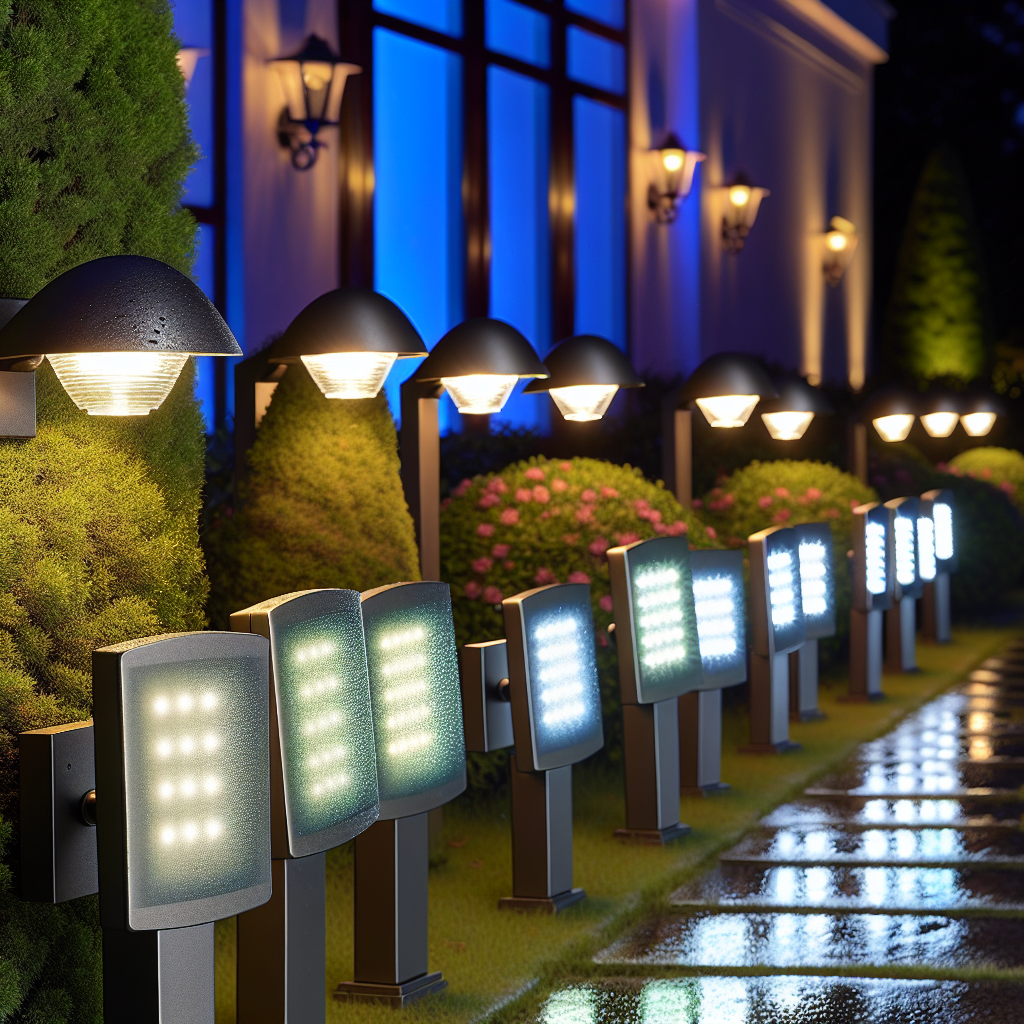
- Wall sconces: IP44–IP65, depending on overhead coverage and water exposure
- Landscape stake lights: IP65+, ideal for ground-level use through rain and dirt
- Security/floodlights: IP66 for forceful sprays and weather resistance
- Deck or stair lights: IP67 to withstand puddles, snow, or spray cleaning
- In-ground lights: IP67–IP68 to resist pressure, water pooling, and occasional vehicle contact
For salt-prone coastal areas, choose fixtures with powder-coated aluminum and silicone gaskets that are UV-resistant for maximum longevity.
Best Practices for Installing Outdoor IP-Rated Lights
Choosing the right outdoor LED IP rating is essential, but installation quality can make or break performance. Always follow manufacturer instructions and use waterproof accessories. For exposed connections, use IP66+ rated junction boxes paired with silicone-sealed wire nuts.
When using 12V low-voltage systems, ensure transformers or LED drivers are IP-rated or housed in outdoor-rated NEMA enclosures. Avoid installing fixtures in water-prone areas unless drainage is provided—especially for IP67 and IP68-rated ground fixtures.
Tip: For smart-enabled lights with sensors or Wi-Fi modules, confirm the enclosures for adapters and accessories are also outdoor-rated and weather-sealed.
Adding Smart Control to Outdoor LED Fixtures
Outdoor lighting can be both functional and intelligent. Integrating smart controls allows you to adjust brightness, color, or schedules remotely. Products from Philips Hue, Govee, and Ring offer advanced features with outdoor-rated durability.
Look for units offering an outdoor LED IP rating of at least IP65 to ensure protection against rain and dust intrusion. Models like the Philips Hue Outdoor Floodlight (IP66) combine robust sealing with smart flexibility for dynamic control. Opt for UV-resistant materials and weather-hardened sensors to avoid sun or storm damage.
Remember, when dealing with smart systems, ensure hubs and connectors are protected through IP-rated conduits or approved weatherproof fittings.
Performance and Efficiency Considerations
Durability is just one part of the equation—outdoor lighting must also perform efficiently. Consider lumen output, color temperature, and energy consumption when selecting fixtures:
- Path and garden lights: 100–300 lumens for soft, directional lighting
- Spotlights or uplights: 500–700 lumens to highlight trees, statues, or architecture
- Security lights: 1000–3000 lumens to increase brightness and visibility across wide areas
Choose warmer color temperatures (2700K–3000K) for cozy residential atmospheres, or cooler whites (4000K+) for clearer visuals in security or commercial zones. Most LEDs consume only 5–20 watts while outperforming older 50–150 watt halogens, offering energy savings and reduced heat output.
Enhance efficiency by pairing fixtures with motion detectors or dusk-to-dawn sensors. These features can dramatically extend LED lifespan and further reduce operating costs.
Weighing Cost vs. Long-Term Value
Budget lighting may seem attractive, but poor construction or low outdoor LED IP rating often results in rusted housings, failed seals, and water-damaged electronics. Investing a bit more upfront delivers major returns through longevity and reliability.
Expect IP65+ LED fixtures to carry a modest premium, but with lifespan ratings up to 50,000 hours and extended 5–10-year warranties from brands like Lithonia, Kichler, and WAC Lighting, the return on investment is clear. Less maintenance, fewer replacements, and improved performance translate to savings in labor, electricity, and frustration.
Smart Planning for Outdoor Lighting Success
The outdoor LED IP rating is more than a technical spec—it’s essential to achieving safe, long-lasting illumination. As the backbone of outdoor lighting design, it protects your investment from water, dirt, and weather failure.
Whether you’re upgrading commercial floodlights or designing a cozy residential garden escape, choosing fixtures engineered for the environment ensures consistent lighting, fewer problems, and greater peace of mind.
With smart technology, efficient LEDs, and proper IP protection in place, your outdoor lighting can thrive in any condition—rain or shine, night after night.