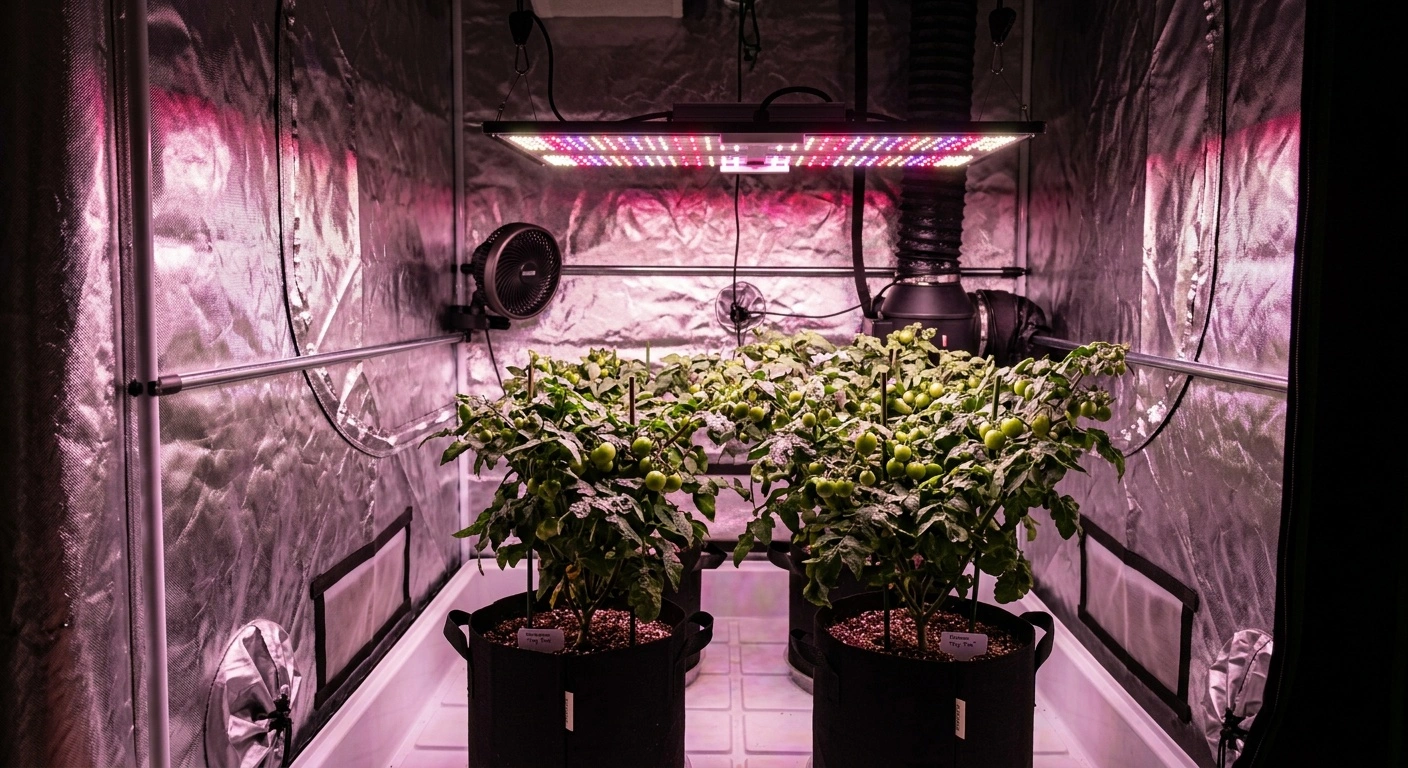
Using grow lights for tomatoes lets you raise healthy plants and harvest ripe fruit indoors throughout the year. Tomatoes need intense light, consistent warmth, and enough room for their roots. A well-planned setup supplies each requirement without wasting electricity.
Using grow lights for tomatoes: the core requirements
Tomatoes demand more light than herbs or leafy greens. Seedlings grow well under moderate light, while flowering plants need much higher intensity. Weak lighting produces thin stems, long gaps between leaves, and poor fruit development.
Aim for 14 to 18 hours of light each day during the seedling stage. Mature plants usually perform well with 12 to 16 hours. Give them at least eight hours of darkness so they can complete normal growth processes.
A timer keeps the schedule consistent. Set it once, then check it whenever daylight-saving time changes or a power outage occurs.
Recommended light intensity
Measure light at the top of the plant canopy rather than at the fixture. Seedlings generally need a photosynthetic photon flux density of 200 to 300 µmol/m²/s. Established plants need about 400 to 600 µmol/m²/s for reliable flowering and fruit production.
Tomatoes can use stronger light, but higher output creates extra heat and raises energy costs. Most home growers gain little from exceeding 700 µmol/m²/s without added carbon dioxide and precise climate control.
A light meter provides the clearest reading. Some phone apps offer rough estimates, but their accuracy varies by device and light source.
Daily light integral
Daily light integral measures the total usable light a plant receives over 24 hours. Fruiting tomatoes often perform well at 20 to 30 mol/m²/day. Seedlings can grow with less while they develop their first true leaves.
You can raise the daily total by increasing intensity or extending the lighting period. Avoid running lamps around the clock. Tomato plants still need a regular dark period.
Choose the right grow light
Full-spectrum LED fixtures suit most indoor tomato gardens. They produce strong usable light, release less heat than older high-intensity lamps, and allow accurate timer control. For most home setups, using grow lights for tomatoes works best with a broad-spectrum white LED fixture.
Look beyond the advertised wattage. Check the fixture’s coverage map and PPFD measurements at several hanging heights. Reliable manufacturers publish these figures for the center and edges of the growing area.
Spectrum and color temperature
Tomatoes use both blue and red wavelengths. Blue light supports compact leaves and sturdy stems, while red light helps drive photosynthesis and flowering. A balanced full-spectrum fixture can support the entire growth cycle.
White LEDs rated between 3,000K and 4,000K work well for mature tomato plants. Seedlings also respond well to cooler fixtures near 5,000K. You do not need to change lamps between stages if your fixture provides a broad spectrum.
Fixture size and coverage
Select a fixture that covers the full canopy at the required intensity. A bright center cannot compensate for dim edges. Rotate containers every few days if the outer leaves receive noticeably less light.
Indeterminate tomatoes keep growing until cold or pruning stops them. Choose compact or dwarf cultivars if ceiling height limits your setup. These plants fit more easily beneath fixed fixtures and require less training.
Set the correct hanging height
Follow the manufacturer’s starting recommendation, then watch the plants closely. Many LED panels hang 12 to 24 inches above the canopy. The correct distance depends on output, optics, and plant age.
Raise the fixture if upper leaves bleach, curl upward, or develop dry patches. Lower it if stems stretch and leaves tilt sharply toward the light. Adjust the lamp in small increments and allow several days before judging the response.
Keep the distance consistent as plants grow. Adjustable ratchet hangers make routine changes faster and safer.
Control temperature and airflow
Tomato seedlings prefer daytime temperatures near 70 to 75°F. Mature plants grow well around 70 to 80°F during the day and slightly cooler at night. Temperatures above 90°F can reduce pollen quality and fruit set.
LED fixtures still add heat to a small room or grow tent. Place a thermometer at canopy height and check it while the lamps run. An exhaust fan can remove warm air before heat stresses the plants.
Use a small circulating fan to move leaves gently. Steady airflow strengthens stems and lowers the risk of fungal disease. Do not point a strong fan directly at young seedlings.
Water and feed indoor tomatoes
Grow lights increase photosynthesis, so plants may use water faster than expected. Check the growing medium daily, but water only when the upper inch feels dry. Soak the root zone thoroughly and empty any drainage tray.
Repeated shallow watering encourages weak surface roots. Constantly wet soil also limits oxygen and can cause root disease.
Begin feeding after seedlings develop true leaves. Use a balanced fertilizer at a diluted rate, then increase the strength as plants mature. Once flowering begins, choose a tomato fertilizer with adequate potassium and moderate nitrogen.
Too much nitrogen produces large leaves and few flowers. Follow the product label and watch for brown leaf tips, which can indicate excess fertilizer salts.
Support flowering and fruit set
Indoor tomatoes cannot rely on outdoor wind or insects for pollination. Shake the flower clusters gently every day or two. You can also touch each cluster with an electric toothbrush for a few seconds.
Keep humidity near 40 to 70 percent during flowering. Very high humidity can make pollen sticky, while very dry air can reduce its effectiveness. Good airflow helps pollen move within each flower.
Provide a cage, stake, or trellis before the plant becomes heavy. Tie stems with soft plant tape and leave room for growth. Prune damaged leaves and shoots that block airflow, but avoid removing too much healthy foliage.
Common grow-light problems
Leggy seedlings
Long, thin stems usually indicate weak light or excessive distance from the fixture. Increase the intensity or lower the lamp gradually. Airflow and proper spacing will also help seedlings develop stronger stems.
Leaf bleaching or curling
Pale upper leaves can signal excessive light. Heat stress often causes leaf edges to curl upward. Raise the fixture, improve ventilation, and confirm the canopy temperature before changing fertilizer.
Flowers that drop
Temperature swings, dry soil, excess nitrogen, and poor pollination can all cause blossom drop. Check each factor rather than assuming the light caused the problem. Stable growing conditions usually restore fruit set.
Fruit that ripens slowly
Low light slows sugar production and ripening. Dense foliage can also shade developing fruit and lower leaves. Improve canopy coverage, train long stems, and remove only the leaves that strongly block light.
A practical indoor lighting routine
Inspect the plants at the same time each day. Check leaf color, soil moisture, fixture height, temperature, and fan operation. This brief routine catches small problems before they reduce the harvest.
- Run the lights for 14 to 18 hours for seedlings.
- Provide 12 to 16 hours for mature plants.
- Maintain 200 to 300 µmol/m²/s for seedlings.
- Maintain 400 to 600 µmol/m²/s for flowering plants.
- Adjust fixture height as the canopy grows.
- Rotate pots if the light coverage remains uneven.
- Clean dust from fixtures after switching them off.
Build a productive indoor tomato setup
Successful indoor tomatoes need more than a bright lamp. Match the fixture to the canopy, maintain a steady schedule, and manage heat, water, nutrition, and pollination. Compact cultivars make the process easier in rooms with limited height.
Using grow lights for tomatoes becomes straightforward once you measure intensity and respond to plant growth. Start with conservative settings, observe the leaves, and make small adjustments. Consistent care will produce stronger plants and a more dependable indoor harvest.