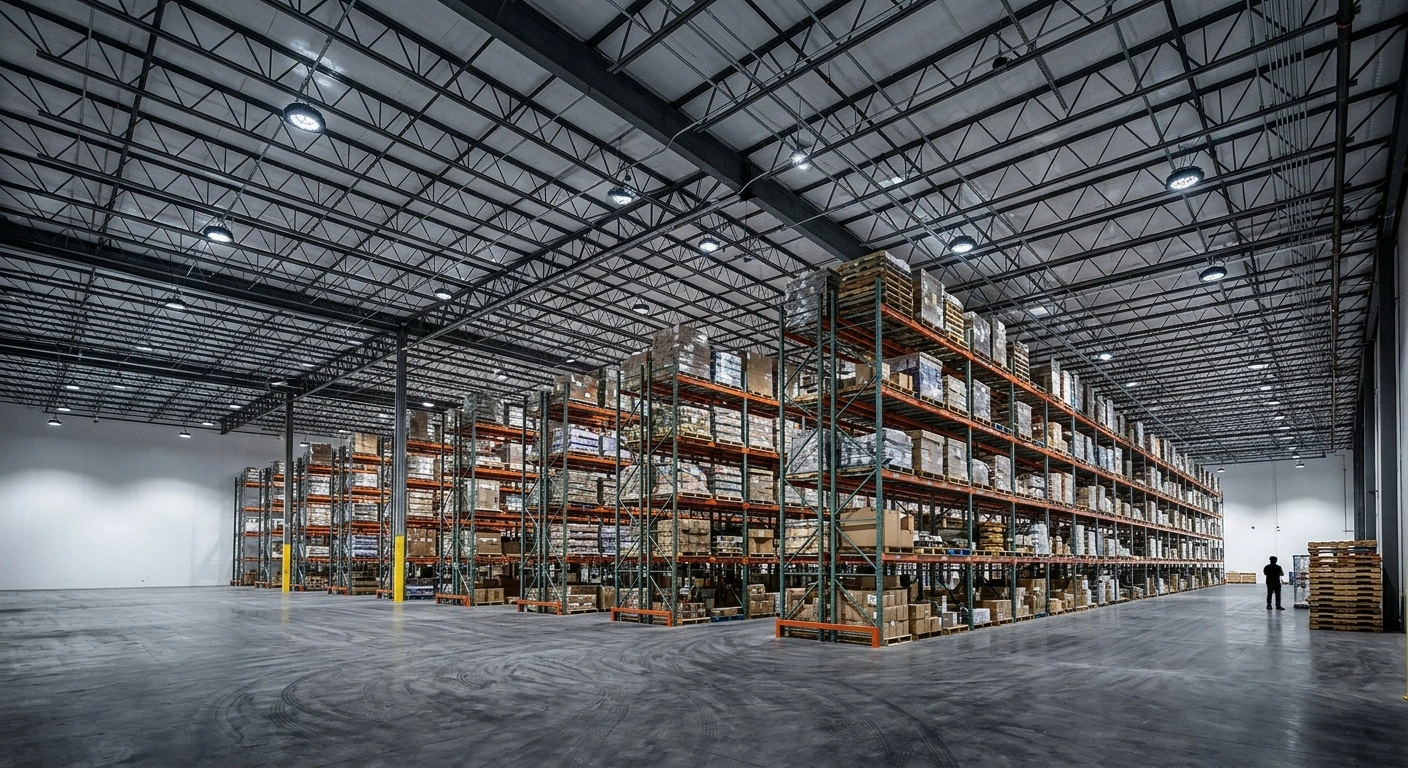
LED high bay lighting provides bright, efficient illumination for warehouses, factories, gymnasiums, and other spaces with high ceilings. The right fixtures can improve visibility while reducing energy use and maintenance work.
How LED High Bay Lighting Works
High bay fixtures distribute light from mounting heights that typically range from 20 to 45 feet. Manufacturers shape that distribution with reflectors, lenses, and fixture geometry.
LED fixtures convert more electrical energy into usable light than metal halide or fluorescent systems. They also reach full brightness immediately, which suits spaces that use occupancy sensors or scheduled controls.
Two fixture styles dominate the market. Round UFO fixtures suit open areas, while linear fixtures often work better above aisles, production lines, and storage racks.
Benefits of Upgrading to LEDs
Energy savings often drive the decision to replace older high bays. A well-planned LED system can deliver the required light with fewer watts than legacy fixtures.
LEDs also maintain their output longer than many metal halide lamps. Facility teams spend less time replacing lamps, moving lifts, and interrupting work areas.
Better control provides another practical advantage. Many fixtures support 0-10V dimming, occupancy sensors, daylight sensors, and networked control systems.
Light quality matters too. A consistent layout reduces dark areas and helps workers read labels, inspect products, and move through aisles safely.
How to Choose the Right High Bay Fixtures
Start With Lumens, Not Wattage
Wattage measures power consumption, while lumens measure light output. Compare fixture lumens and efficacy rather than assuming that a higher wattage produces a better result.
Efficacy appears as lumens per watt. A more efficient fixture can produce the same output while drawing less power.
Match the Beam Angle to the Space
Narrow beam angles concentrate light from greater mounting heights. Wider distributions cover more floor area at lower heights but may create glare if the layout uses excessive output.
Racking and equipment can block light. In those spaces, a photometric plan helps determine fixture locations, beam patterns, and expected light levels.
Check Color Temperature and CRI
Many industrial facilities use a correlated color temperature between 4000K and 5000K. A 4000K fixture produces a neutral white appearance, while 5000K looks cooler.
The color rendering index indicates how accurately a light source shows colors. A CRI of 80 meets many general industrial needs, though inspection work may require a higher rating.
Confirm Environmental Ratings
Dust, moisture, heat, and cleaning practices affect fixture selection. Check the IP rating, operating temperature range, and wet-location listing before specifying a product.
Food production, washdown areas, and heavy manufacturing may require sealed housings or corrosion-resistant materials. Hazardous locations need fixtures with the correct certification for the site classification.
Plan Light Levels and Fixture Spacing
Do not choose LED high bay lighting through a simple one-for-one wattage swap. Existing fixtures may deliver uneven or inadequate light, even if their listed output appears sufficient.
A lighting professional can calculate average illumination, uniformity, and light levels at the work surface. The plan should also account for wall reflectance, rack height, equipment, and fixture depreciation.
Warehouses often need different light levels in storage aisles, loading areas, packing stations, and inspection zones. Task requirements and applicable safety guidance should shape the final design.
Controls and Energy Savings
Controls reduce power use when areas sit empty or receive enough daylight. Occupancy sensors work especially well in warehouses with intermittently used aisles.
Choose sensors that match the mounting height and movement pattern. A sensor that works in a small office may not detect forklifts reliably from a high ceiling.
Facilities can also group fixtures by zone. This approach lets managers dim or switch areas according to shifts, production schedules, and daylight conditions.
Installation and Retrofit Considerations
Before installation, verify the supply voltage, circuit capacity, mounting hardware, and control wiring. A qualified electrician should complete the work according to local electrical codes.
Retrofit projects may reuse existing junction boxes or mounting points. However, installers should inspect those components before attaching new fixtures.
Also review emergency lighting requirements. General high bay fixtures do not replace code-required emergency or egress lighting unless the system carries the proper listing and backup equipment.
Maintenance and Long-Term Performance
LED fixtures still need routine inspection. Dust on lenses and heat sinks can reduce output or interfere with thermal management.
Review each product’s rated life, lumen-maintenance data, driver specifications, and warranty terms. The driver often determines how the fixture performs under heat and frequent switching.
Keep records of fixture models, installation dates, control settings, and warranty documents. Clear records simplify troubleshooting and future replacement planning.
A Practical High Bay Upgrade
A successful LED high bay lighting project starts with the room, the work, and the required light levels. Fixture output, distribution, controls, and environmental ratings should support those conditions.
Use a photometric layout instead of relying on wattage alone. With careful planning, an LED upgrade can improve visibility, lower operating costs, and reduce maintenance demands.