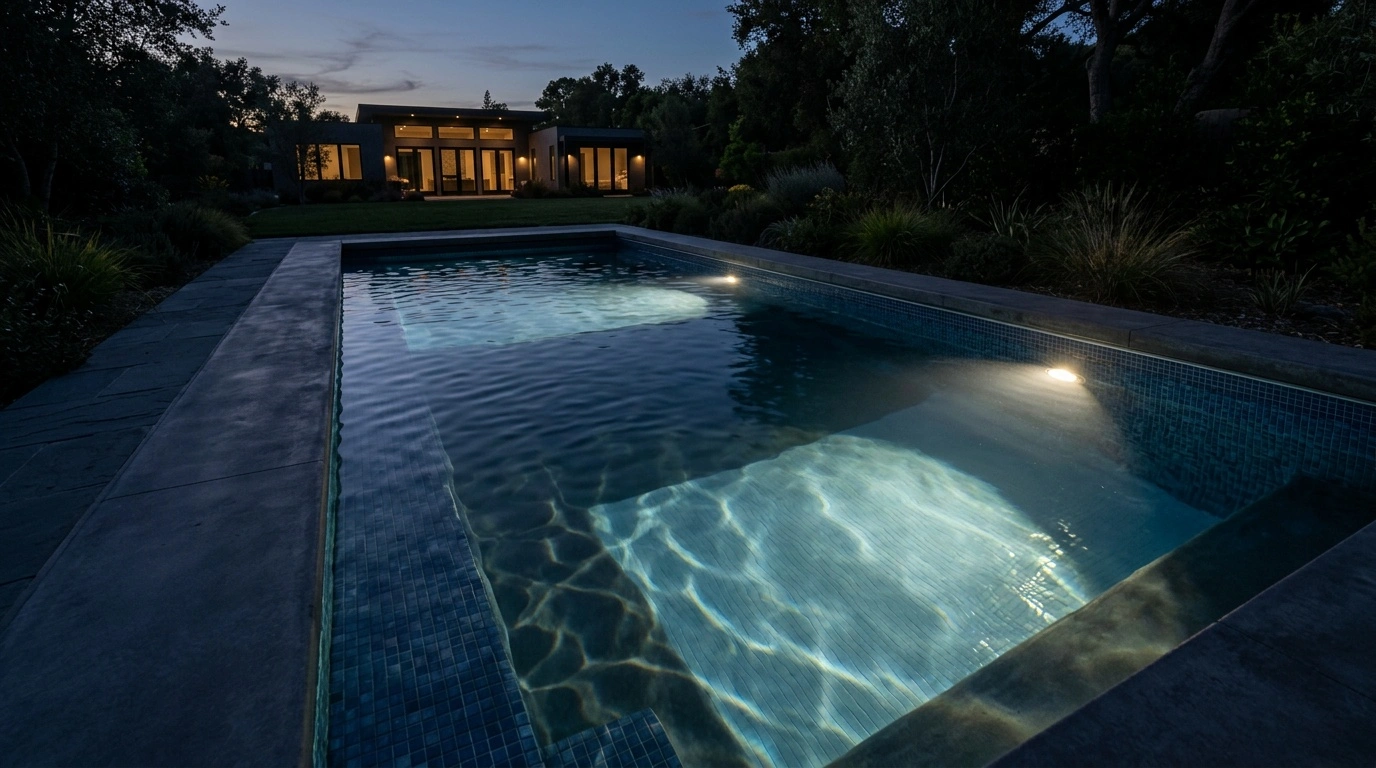
An led inground swimming pool light can improve nighttime visibility while using less energy than many older fixtures. However, voltage, fixture type, beam pattern, and code compliance matter more than color-changing modes. Use this guide to compare practical options before buying.
How to Choose an led inground swimming pool light
Start by identifying the fixture already installed in your pool. Check the niche type, voltage, cord length, housing dimensions, and manufacturer specifications. A compatible replacement reduces installation work and prevents sealing problems.
Match the Fixture to the Pool Niche
Traditional wet-niche fixtures sit inside a metal or polymer housing in the pool wall. Nicheless lights use smaller fittings and often connect through dedicated wall penetrations. These systems usually require different mounting hardware and electrical components.
Do not rely on diameter alone when choosing a replacement. Screw positions, face rings, gaskets, and cord exits can vary between models. Confirm compatibility with both the fixture manufacturer and the existing niche.
Verify Voltage and Transformer Requirements
Pool lights commonly operate at either line voltage or low voltage. Never assume that an existing transformer supports a new fixture. Check the required voltage, current type, total wattage, and transformer capacity.
Some low-voltage LEDs require a specific AC or DC supply. Color-changing fixtures may also need compatible controllers or switches. An electrician can test the circuit before installation.
Compare Light Output Instead of Wattage
Wattage measures power use, not visible brightness. Compare lumen output when manufacturers provide it. Also review beam angle and recommended pool coverage.
Dark pool finishes absorb more light than white plaster or pale tile. Large pools may need several fixtures for even coverage. Careful placement also limits glare near patios, windows, and seating areas.
Choose White or Color-Changing Light
White LEDs provide clear, consistent illumination for swimming and maintenance. Color-changing models support programmed scenes, but they require compatible controls. Some systems synchronize several fixtures from one switch or controller.
Review how the light behaves after a power interruption. Basic models may cycle colors through repeated switch commands. App-controlled systems can offer easier adjustment, although they add components that may need service later.
Check Construction and Pool Compatibility
Before buying any led inground swimming pool light, confirm that the manufacturer lists it for permanent underwater use. A general waterproof rating does not replace a pool-specific safety listing. The fixture must also suit the pool structure and sanitation system.
Saltwater pools can accelerate corrosion on unsuitable metals. Look for compatible stainless steel, bronze, or engineered polymer components. Follow the manufacturer’s chemistry limits to protect seals and face rings.
Concrete, fiberglass, and vinyl-lined pools may use different fittings. Vinyl pools require hardware that protects the liner around each wall penetration. Use only the gaskets and mounting parts specified for that application.
Plan for Safe Installation
Pool electrical work carries a serious shock risk. Hire a qualified pool professional or licensed electrician who understands local electrical codes. The installer should verify grounding, bonding, circuit protection, and junction-box placement.
Confirm GFCI and Bonding Protection
Applicable codes often require ground-fault circuit interrupter protection for pool-lighting circuits. Bonding requirements help keep conductive pool components at the same electrical potential. Local rules and fixture instructions determine the correct arrangement.
Turning off a wall switch does not make the circuit safe. A professional should disconnect power at the proper source and test the conductors. That step protects both the installer and swimmers.
Protect the Cord and Seal
Installers typically leave enough cord to bring a wet-niche fixture onto the deck for future service. They should never create an underwater splice unless an approved system specifically permits it. Most replacement jobs require an uninterrupted factory cord.
A clean gasket and undamaged sealing surface help keep water outside the housing. Reusing a compressed or brittle gasket can cause leaks. Follow the specified screw pattern and torque instead of overtightening the lens.
Estimate Energy Use and Service Life
LED fixtures generally draw less power than comparable incandescent pool lights. You can estimate annual consumption with a simple calculation. Multiply fixture wattage by operating hours, then divide by 1,000 to find kilowatt-hours.
For example, a 35-watt light running five hours per day for 120 days uses about 21 kilowatt-hours. Multiply that figure by your electricity rate to estimate annual cost. Controllers and transformers may add a small amount.
Published LED lifespan figures describe the light source under specified test conditions. Heat, water intrusion, voltage problems, and frequent power cycling can shorten actual service life. Review the complete fixture warranty rather than relying on the diode rating alone.
Maintain the Light and Watch for Problems
Keep the lens free of scale, dirt, and algae. Balanced pool chemistry helps protect gaskets, metal parts, and clear lenses. Avoid abrasive pads that could scratch the surface.
Shut off the circuit if you see water inside the fixture. Flickering, uneven colors, repeated breaker trips, or corrosion also require inspection. Do not operate a damaged underwater light.
If several synchronized lights display different colors, reset them according to the controller instructions. Persistent mismatches may indicate a controller, wiring, or fixture problem. A technician can isolate the fault without guessing.
Select a Light That Fits the Existing System
The right led inground swimming pool light should match the pool niche, electrical supply, controls, and construction type. Compare verified light output, cord length, materials, safety listings, and warranty coverage. Proper selection makes installation safer and future service more manageable.