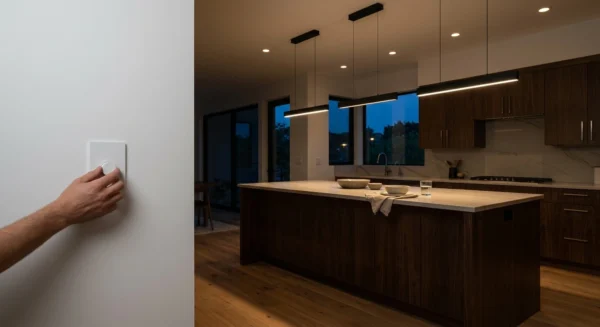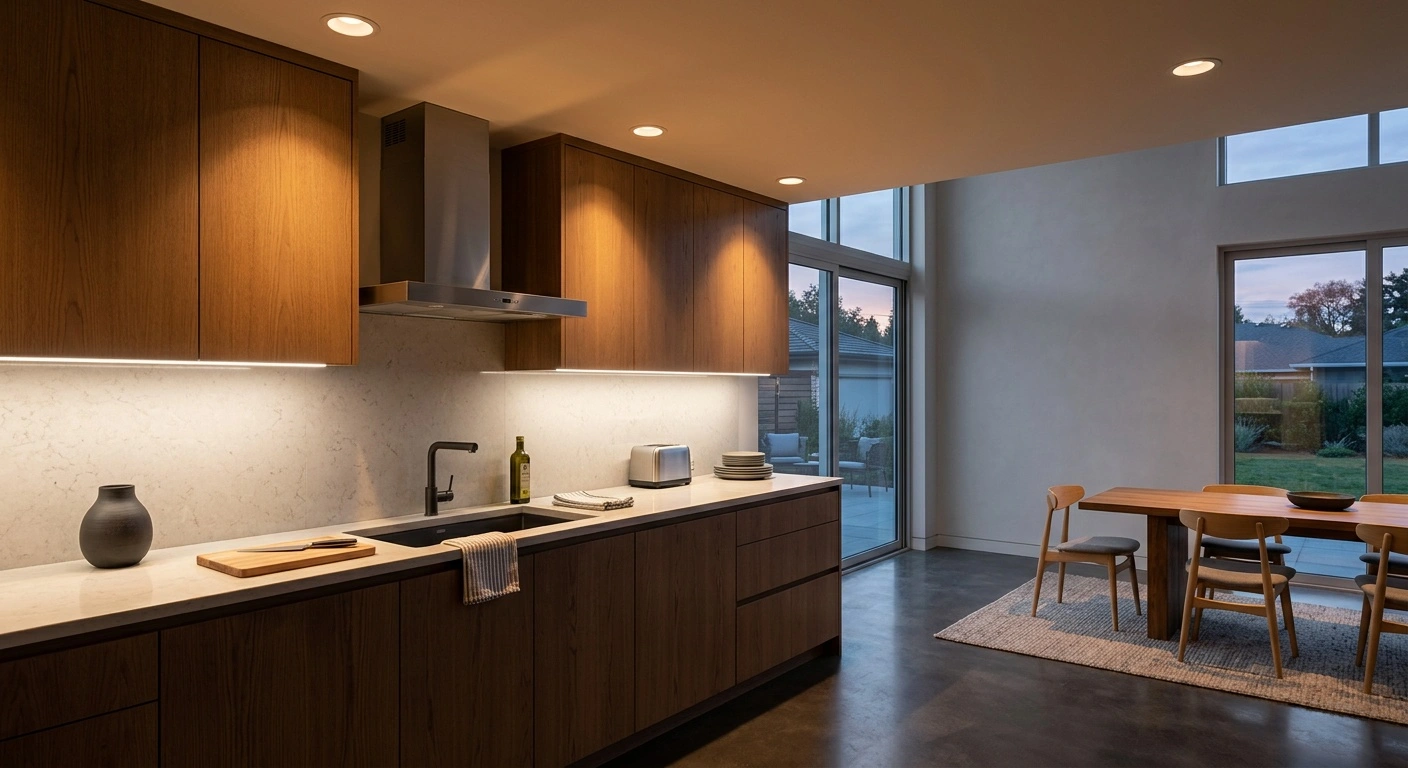
The phrase led light colors covers both colored illumination and the white tones measured by color temperature. Understanding these differences helps you choose suitable lighting for rooms, work areas, displays, and outdoor spaces.
How led light colors work
An LED produces light when electrical current passes through a semiconductor. The semiconductor materials determine the light’s wavelength and visible color.
Some fixtures use separate red, green, and blue diodes to create a wide range of colors. These RGB lights adjust each channel’s intensity to produce different combinations. RGBW fixtures add a dedicated white diode for cleaner white light.
Colored light versus white color temperature
Colored LEDs produce distinct hues such as red, blue, green, or purple. White LEDs work differently. Manufacturers typically create white light by applying a phosphor coating to a blue LED.
Color temperature describes the appearance of white light in kelvins (K). Lower values look warm and yellow, while higher values appear cool and slightly blue. Color temperature does not measure a lamp’s physical heat.
Common white LED color temperatures
Each color temperature supports different tasks and settings. Product labels may vary slightly, so check the kelvin rating instead of relying only on terms such as “warm” or “daylight.”
Warm white: 2,200K to 3,000K
Warm white light has a soft yellow or amber cast. It works well in bedrooms, living rooms, restaurants, and other spaces designed for rest.
LEDs near 2,200K resemble candlelight or dimmed incandescent bulbs. A 2,700K lamp closely matches the familiar color of a standard household incandescent bulb.
Neutral white: 3,500K to 4,100K
Neutral white reduces the yellow cast without producing a strong blue tone. Home offices, kitchens, bathrooms, and retail spaces often use this range.
These lamps can make work surfaces and products easier to see. However, color rendering also matters when accurate color perception is important.
Cool white and daylight: 5,000K to 6,500K
Cool white light has a crisp appearance with a noticeable blue component. Workshops, garages, warehouses, clinics, and task-oriented spaces commonly use it.
Daylight lamps can support detailed work, but they may feel harsh in relaxing areas. Fixtures with glare control can make high-output lighting more comfortable.
What different LED colors can indicate
Device manufacturers often use colored LEDs to communicate status. However, meanings differ across products, so the equipment manual remains the most reliable guide.
- Red: Often indicates a warning, fault, recording state, or low battery.
- Green: Commonly signals normal operation, a completed charge, or an active connection.
- Blue: Frequently shows Bluetooth pairing, wireless activity, or standby mode.
- Amber or yellow: May indicate charging, caution, or a temporary operating state.
- White: Often marks power, general illumination, or normal operation.
Do not assume a color has the same meaning on every device. For example, a blinking red indicator may signal an error on one product and active recording on another.
Choosing led light colors for each room
Start with the room’s primary use. Warm light supports relaxation, while neutral or cool light can improve visibility for cooking, grooming, reading, and detailed work.
Bedrooms and living rooms
Choose lamps between 2,200K and 3,000K for a calm, familiar appearance. Dimmable fixtures give you more control during evenings and early mornings.
Kitchens and bathrooms
A range of 3,000K to 4,000K usually provides clear task lighting without looking overly blue. Use a high color rendering index around mirrors, counters, and food preparation areas.
Offices and workshops
Neutral or cool white light between 3,500K and 5,000K suits many workspaces. Select the brightness and beam pattern according to the task rather than color temperature alone.
Outdoor areas
Warm outdoor lighting can reduce glare and create a softer appearance near homes. Shielded fixtures direct light downward and limit unnecessary spill into windows or neighboring property.
Some communities restrict outdoor color temperature to reduce sky glow or environmental effects. Check local rules before installing high-output exterior fixtures.
Color rendering, brightness, and controls
Color temperature describes the shade of white light, but it does not show how accurately colors will appear. The color rendering index (CRI) provides a general measure of color accuracy.
A CRI of 80 works for many routine applications. Choose 90 CRI or higher for artwork, clothing, makeup, food preparation, or other color-sensitive tasks.
Brightness also affects the result. Compare lumens rather than watts because lumens measure light output. Wattage measures energy use.
Smart bulbs and tunable-white fixtures let users change color temperature throughout the day. Check app compatibility, dimmer requirements, and hub support before buying.
Selecting the right LED color
Understanding led light colors requires more than choosing a favorite hue. Consider color temperature, CRI, brightness, beam angle, and fixture placement together.
Review the kelvin rating and product specifications before installation. A sample lamp can also show how wall colors, furnishings, and natural light affect the final appearance.