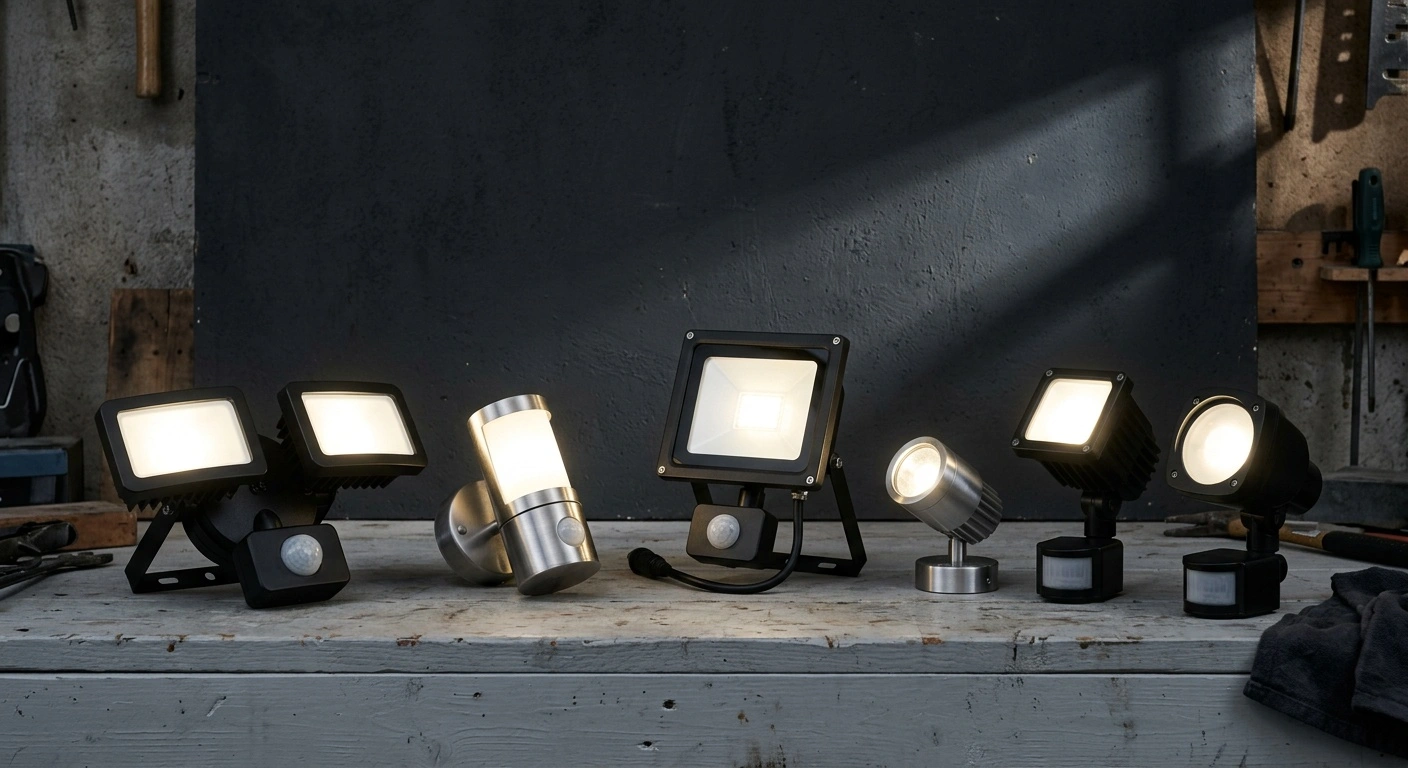
The right led motion sensor light improves visibility while limiting unnecessary power use. It can illuminate a driveway, entry, hallway, or storage area as soon as someone approaches. Choosing the right model depends on brightness, sensor range, location, and power source.
How to Choose an led motion sensor light
Start by deciding where you need light and how much area it must cover. A small porch needs less output than a wide driveway or detached garage.
Check Brightness and Light Color
Manufacturers measure brightness in lumens. Indoor fixtures may need only a few hundred lumens, while large outdoor areas often require 1,000 lumens or more.
Color temperature also affects how the light looks. Warm white light around 2700K to 3000K suits entrances and indoor spaces. Cooler light between 4000K and 5000K provides clearer visibility around garages, paths, and work areas.
Compare Sensor Range and Detection Angle
Sensor range tells you how far away movement can trigger the fixture. Detection angle describes how much of the surrounding area the sensor monitors.
A narrow entry may only need a short range and a 90-degree angle. Driveways and yards often benefit from longer ranges and angles near 180 degrees. Adjustable sensors let you aim detection away from sidewalks, roads, or neighboring properties.
Choose the Right Power Source
Hardwired lights provide steady power and suit permanent installations. They work well above garages, exterior doors, and other places with existing electrical wiring.
Battery-powered models require no electrical connection, so they fit closets, sheds, and rental properties. However, cold weather and frequent activation can shorten battery life.
Solar fixtures work best where the panel receives several hours of direct sunlight. Shade, dirt, short winter days, and poor panel placement can reduce runtime.
Outdoor Ratings and Weather Protection
Outdoor fixtures need protection from moisture and dust. Check the ingress protection rating before mounting a light in an exposed location.
An IP44 fixture can handle splashing water and usually suits a covered porch. More exposed walls and posts may require IP65 protection or better. Always follow the manufacturer’s location and mounting instructions.
Where to Place Motion Sensor Lights
Mount exterior lights high enough to resist tampering but low enough for the sensor to detect movement. Many wall-mounted models perform well at heights between six and ten feet.
Avoid aiming the sensor at moving branches, busy roads, air vents, or reflective surfaces. These sources can cause false activations. Place the fixture so people cross the detection zone rather than walk directly toward it, if the sensor instructions recommend that layout.
Useful Indoor Locations
- Closets and pantries
- Stairways and corridors
- Laundry rooms
- Basements and utility areas
- Garages and workshops
Indoor motion lights help in spaces where switches sit in awkward locations. They also reduce the chance of leaving lights on in rooms used for short periods.
Useful Outdoor Locations
- Front and side doors
- Driveways and parking areas
- Walkways and steps
- Patios and decks
- Sheds and detached garages
Before buying an led motion sensor light, inspect the mounting surface and nearby power options. Also check whether doors, gutters, or rooflines could block the sensor.
Installation and Setup
Battery and solar models usually need basic mounting hardware and a drill. Test the sensor position before making permanent holes.
Turn off power at the breaker before working on a hardwired fixture. Confirm that the circuit has no voltage with a suitable tester. Hire a licensed electrician if you lack experience with household wiring or local electrical rules.
Adjust the Controls
Many fixtures include controls for sensitivity, illumination time, and daylight operation. Begin with medium sensitivity, then test the light by walking through the detection area.
Reduce sensitivity if traffic, animals, or branches trigger the light too often. Increase the timer only when the area needs longer illumination. A short timer usually works well for doorways and paths.
Common Problems and Practical Fixes
If the light stays on, lower the sensitivity and check for movement near the sensor. Clean the lens and move heat sources, reflective objects, or branches out of its field.
If the fixture fails to activate, check the power supply, batteries, and daylight setting. Solar models may need a full day of direct sun before they operate for the expected period.
Intermittent performance can indicate loose wiring, weak batteries, or a poor sensor angle. Follow the troubleshooting steps in the product manual before replacing the fixture.
A Smarter Lighting Choice
A well-placed led motion sensor light can improve access, visibility, and convenience around a property. Match the brightness, sensor coverage, weather rating, and power source to the actual installation site.
Motion lighting can discourage casual trespassing, but it cannot replace locks, alarms, or other security measures. Test the fixture after installation and adjust it as seasons, plants, and traffic patterns change.