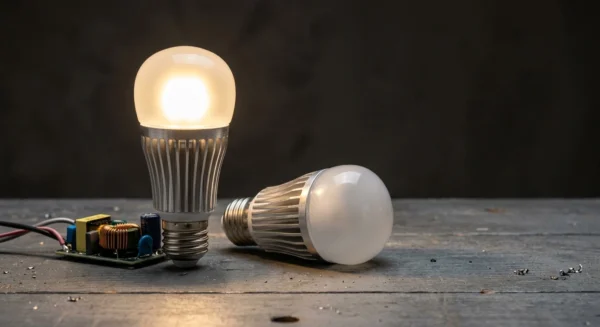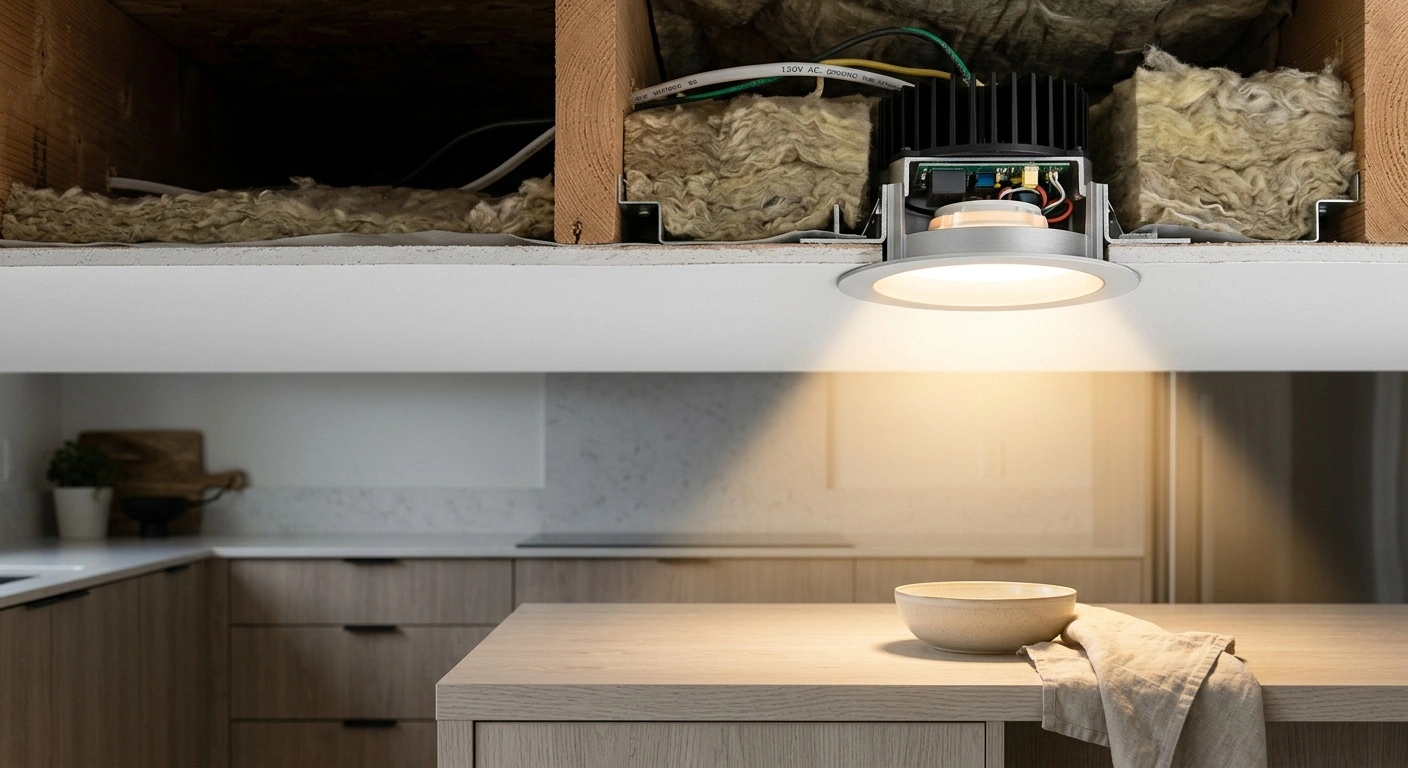
Do LED lights get hot? Yes. However, a properly selected LED bulb produces much less heat than an equally bright incandescent or halogen lamp. LED chips and electronic drivers create heat, which must escape through a heat sink or fixture housing.
This guide covers residential LED bulbs and fixtures. That includes lamps, recessed lights, under-cabinet strips, bathroom lights, and outdoor fixtures. The illuminated face may stay cool while the base, driver compartment, or aluminum housing becomes too hot to touch.
Some heat is normal. Excessive heat, discoloration, odors, repeated shutdowns, or unusually short bulb life can signal a problem. The fixture must release heat as quickly as its electronics produce it.
Do LED Lights Get Hot Enough to Burn You?
Some LED bulbs and fixtures can cause discomfort or a minor contact burn. Metal heat sinks, screw bases, and driver housings often become the hottest parts. Switch off the light and let it cool before removing or inspecting it.
A small LED night-light may feel barely warm. In contrast, a high-output bulb inside a recessed can may become too hot to hold comfortably. Never use your hand to test the temperature of an operating lamp.
Surface temperature depends on wattage, room temperature, airflow, fixture design, and enclosure type. Therefore, no single temperature range applies to every LED product. Manufacturers also do not always publish accessible surface-temperature data.
The LED junction inside the package runs much hotter than the surrounding room. This junction temperature affects lumen maintenance, color stability, and driver life. A cool lens does not prove that the internal electronics are cool.
| Light source | Typical input for about 800 lumens | Where heat is noticeable | Primary concern |
|---|---|---|---|
| LED bulb | About 8 to 10 watts | Base, heat sink, or driver housing | Heat buildup in enclosed fixtures |
| CFL | About 13 to 15 watts | Tube and electronic base | Slow warm-up and ballast heat |
| Incandescent bulb | About 60 watts | Glass envelope and socket area | Very hot surfaces and greater fixture heat |
These wattages represent typical product ranges, not specifications for every lamp. Compare bulbs by lumens because watts measure electrical power rather than brightness. About 800 lumens matches the familiar output of a traditional 60-watt incandescent bulb.
Why Do LED Lights Get Hot?
An LED cannot convert all its electrical input into visible light. Losses in the diode, driver, wiring, and optical system become heat. The fixture must then transfer that heat into the surrounding air.
Visible light also becomes heat when walls, furniture, and other surfaces absorb it. Some light may leave through windows or openings. Still, most electrical energy used inside a room eventually contributes to its heat load.
The main difference between LED and incandescent lighting is total power input. A 9-watt LED uses far less electricity than a 60-watt incandescent producing about 800 lumens. As a result, the LED adds much less total heat to the room.
Incandescent lamps also radiate considerable infrared energy from their hot filaments and glass. LEDs usually move waste heat backward into a circuit board, heat sink, or fixture body. This design reduces radiant heating in front of the light.
An LED can illuminate food, artwork, or a countertop without heating it as much as an incandescent source. However, the LED base may still become hot. A cool beam does not mean the electronics produce no heat.
How Heat Moves Through an LED Bulb or Fixture
Heat starts at the semiconductor junction and travels through the LED package. It then passes into a circuit board, aluminum plate, heat sink, or metal housing. Air movement carries heat away from those exposed surfaces.
A screw-in LED bulb may hide an aluminum heat spreader beneath a plastic shell. Therefore, a bulb can look like an all-plastic product while still containing metal cooling parts. Integrated recessed lights often use a metal backplate or housing as part of the thermal path.
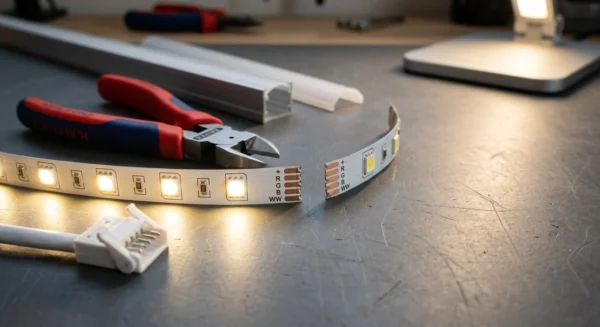
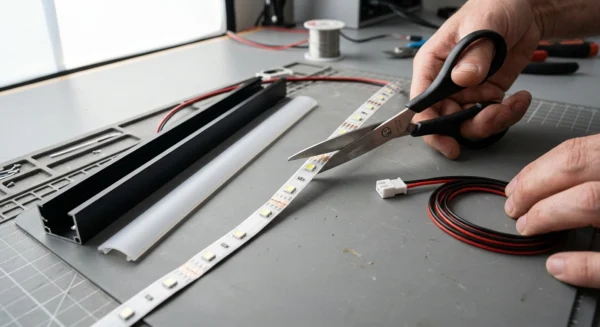
LED tape also relies on its mounting surface to release heat. Higher-power strips often last longer in a properly sized aluminum channel. Wood, drywall, and other insulating surfaces hold more heat around the strip.
| Component | Function | Signs of heat trouble |
|---|---|---|
| LED package | Produces light | Rapid lumen loss or color shift |
| Driver | Converts and regulates power | Flicker, buzzing, cycling, or failure to start |
| Circuit board | Supports LEDs and conducts heat | Darkening or localized discoloration |
| Heat sink or housing | Spreads heat over a larger area | Excessive temperature when airflow is blocked |
| Ventilation space | Allows heat to enter the surrounding air | Shortened life when covered or sealed |
Dust can act as insulation when it collects around vents or cooling fins. Keep ventilation openings clean and unobstructed. Never cover a lamp, driver, or fixture with fabric, paper, foam, or decorations unless the manufacturer allows it.
A warm metal housing does not automatically indicate a defect. In many fixtures, that housing carries heat away from sensitive electronics. Cycling, scorching, odors, or melting provide stronger evidence of a problem.
Enclosed Fixtures Create Common Heat Problems
Enclosed fixtures trap warm air around a bulb and restrict natural convection. Examples include glass globes, sealed porch lights, shower trims, flush-mount ceiling lights, and decorative jars. A bulb that works in an open lamp may fail early inside one of these fixtures.
Check the packaging or manufacturer’s instructions for an enclosed-fixture rating. Do not assume that low wattage makes every LED safe for a sealed housing. Heat can damage temperature-sensitive capacitors and other driver components before it damages the LED chips.
Recessed cans introduce a separate concern. The housing needs an insulation-contact rating if insulation will touch it. Manufacturers commonly identify these housings as IC-rated.
An IC rating does not make every replacement bulb suitable for an enclosure. Follow the instructions for both the housing and the lamp. Never pack insulation around a non-IC recessed housing.
Integrated LED retrofit trims often manage heat better than oversized bulbs forced into small cans. Use a trim designed for the specific housing and maintain the required clearances. Hire a licensed electrician if the work requires changing wiring, housings, or junction-box connections.
Can LED Lights Start a Fire?
A properly installed, listed LED product should not create a fire hazard during normal operation. However, LEDs can still develop electrical faults or overheat after improper installation. Loose socket contacts, damaged cords, poor-quality drivers, and prohibited enclosures increase the risk.
Shut off the fixture immediately if you notice a burning odor, crackling sound, melted plastic, or darkened socket. Do not install another bulb before finding the cause. A damaged socket or conductor may continue to overheat with a new lamp.
For permanent fixtures, choose products listed by a recognized testing organization such as UL or ETL. Use each product only in the locations covered by its listing. A dry-location fixture belongs indoors and away from moisture.
Damp-location fixtures can handle condensation or indirect moisture. Fixtures directly exposed to rain need a wet-location rating. Shower areas may also require wet-location-listed equipment under local electrical codes.
For outdoor lighting, check the manufacturer’s IP rating when available. IP65 indicates dust protection and resistance to water jets, but it does not permit submersion. Areas that may flood need fixtures specifically approved for that condition.
Never exceed the fixture’s marked maximum lamp wattage. Also follow restrictions for lamp shape, operating orientation, and enclosure use. Ask a licensed electrician to repair burned sockets, damaged conductors, or line-voltage wiring.
How Heat Affects Brightness and LED Lifespan
Excess heat speeds up wear in LED packages, phosphors, plastics, solder joints, and driver components. The lamp may dim gradually, shift color, flicker, or fail completely. Heat damage often appears in the driver before the LED chips stop working.
A lamp that switches off and returns after cooling may have activated thermal protection. However, a failing driver or loose socket connection can cause similar symptoms. Inspect the installation rather than assuming the bulb works normally.
Manufacturers often describe LED lifespan through lumen maintenance. The term L70 marks the projected point when output falls to 70 percent of its initial level. Testing and thermal assumptions support this projection, but it does not guarantee an exact service life.
Real fixtures may run hotter than laboratory test setups. Small recessed cans and sealed glass shades present especially difficult conditions. High room temperatures also reduce the lamp’s available cooling margin.
For example, a bulb above a hot oven faces more stress than the same bulb in an open bedroom lamp. Likewise, attic heat can affect recessed fixtures near the ceiling. Always check the product’s allowable ambient-temperature range.
A brighter lamp usually draws more power and creates more heat. Select the required lumens before comparing wattage, dimensions, and enclosure ratings. Still, wattage alone does not determine quality because good thermal design can manage higher output effectively.
Dimming Can Reduce Heat, but Compatibility Matters
Dimming usually lowers an LED’s average power draw and heat output. However, it cannot make a prohibited installation safe. A bulb without an enclosed-fixture rating remains unsuitable for a sealed globe, even at half brightness.
The bulb or fixture must support dimming. You also need a dimmer that the LED manufacturer identifies as compatible. An incompatible control can cause flicker, buzzing, unstable output, or poor low-level performance.
Older incandescent dimmers may require more electrical load than a small group of LEDs provides. The lamps may glow while switched off, flash during startup, or shut down before reaching a useful low setting. Mixing bulb brands or models can make these problems less predictable.
Replacing a wall dimmer requires work inside an electrical box. Use a licensed electrician unless you have the necessary qualifications and local rules permit the work. The electrician should confirm the LED load rating, wiring arrangement, and neutral requirements.
How Much Less Heat Does an LED Add to a Room?
Consider a 60-watt incandescent and a 9-watt LED that each produce about 800 lumens. The LED reduces fixture input by 51 watts. That difference also represents a substantial reduction in the room’s internal heat load.
At three operating hours per day, the annual energy difference is about 55.8 kilowatt-hours. At $0.16 per kilowatt-hour, the LED saves about $8.93 per year for one bulb. Actual savings depend on wattage, operating time, and local electricity rates.
Lower power input can also reduce air-conditioning demand during warm weather. The exact cooling benefit depends on climate, fixture location, and system efficiency. During winter, incandescent waste heat contributes to room heating, but it provides poor temperature control.
Compare lamps with similar lumen output when estimating savings. Color temperature and beam distribution also affect how useful the light feels. A directional LED may place more light on a work surface while using fewer lumens.
How to Diagnose an LED That Seems Too Hot
Turn off the power and let the lamp cool before inspecting it. Confirm the bulb’s wattage, enclosure rating, operating orientation, and ambient-temperature range. Clean vents and remove anything blocking airflow.
Do not remove an operating bulb. An infrared thermometer can help compare similar surfaces, but shiny metal may produce misleading readings. Manufacturer limits provide better guidance than one isolated surface-temperature measurement.
| Problem | Likely cause | Recommended action |
|---|---|---|
| Bulb becomes very hot and fails early | The bulb lacks an enclosed-fixture rating | Install an enclosed-fixture-rated LED or replace the fixture |
| Light switches off and later returns | Thermal protection or a failing driver | Check ventilation and replace the lamp if the installation meets its ratings |
| Light flickers or buzzes while dimmed | Incompatible dimmer or non-dimmable lamp | Use a dimmable LED with a compatible LED-rated control |
| Socket or base looks discolored | Loose contact, arcing, or prolonged overheating | Stop using the fixture and have an electrician inspect it |
| Outdoor fixture contains moisture | Wrong location rating or a failed seal | Use a wet-location-listed fixture and repair the water entry point |
| LED strip changes color or dims along its length | Heat buildup, voltage drop, or an undersized power supply | Use an aluminum channel, suitable conductors, and a properly sized listed driver |
If several bulbs fail quickly in the same fixture, investigate the installation. A damaged socket, abnormal supply voltage, or incompatible control can destroy otherwise suitable LEDs. Replacing bulbs repeatedly will not correct the underlying fault.
Burning odors, melted insulation, visible arcing, and repeated breaker trips require immediate attention. Switch off the circuit and contact a licensed electrician. Do not continue testing the fixture.
Choosing an LED That Manages Heat Safely
Start with the lumen output you need rather than an assumed wattage equivalent. Next, check the bulb’s enclosure rating, permitted orientation, dimensions, and ambient-temperature range. Leave enough space around the lamp for airflow.
For integrated fixtures, follow the manufacturer’s clearance and insulation requirements. Keep insulation away unless both the product and housing allow contact. Use LED strips with suitable aluminum channels when the manufacturer recommends them.
Choose UL- or ETL-listed products from manufacturers that publish clear installation limits. Match the fixture to the location with the correct dry, damp, or wet rating. For exposed outdoor installations, verify both the location listing and any stated IP rating.
Expect the base or metal body of an operating LED to become warm or hot. Those surfaces often carry heat away from the electronics. However, cycling, scorching, melting, odors, and repeated early failures are not normal.
The right LED will still generate heat, but its housing should control that heat safely. Proper bulb selection, ventilation, and installation protect light output and driver life. They also reduce the risk of damaged sockets and premature failure.