LED surface mount lighting provides broad, practical illumination without the depth required for recessed fixtures. These low-profile lights attach directly to ceilings or walls, making them useful in homes, offices, shops, and utility spaces.
How LED Surface Mount Lighting Works
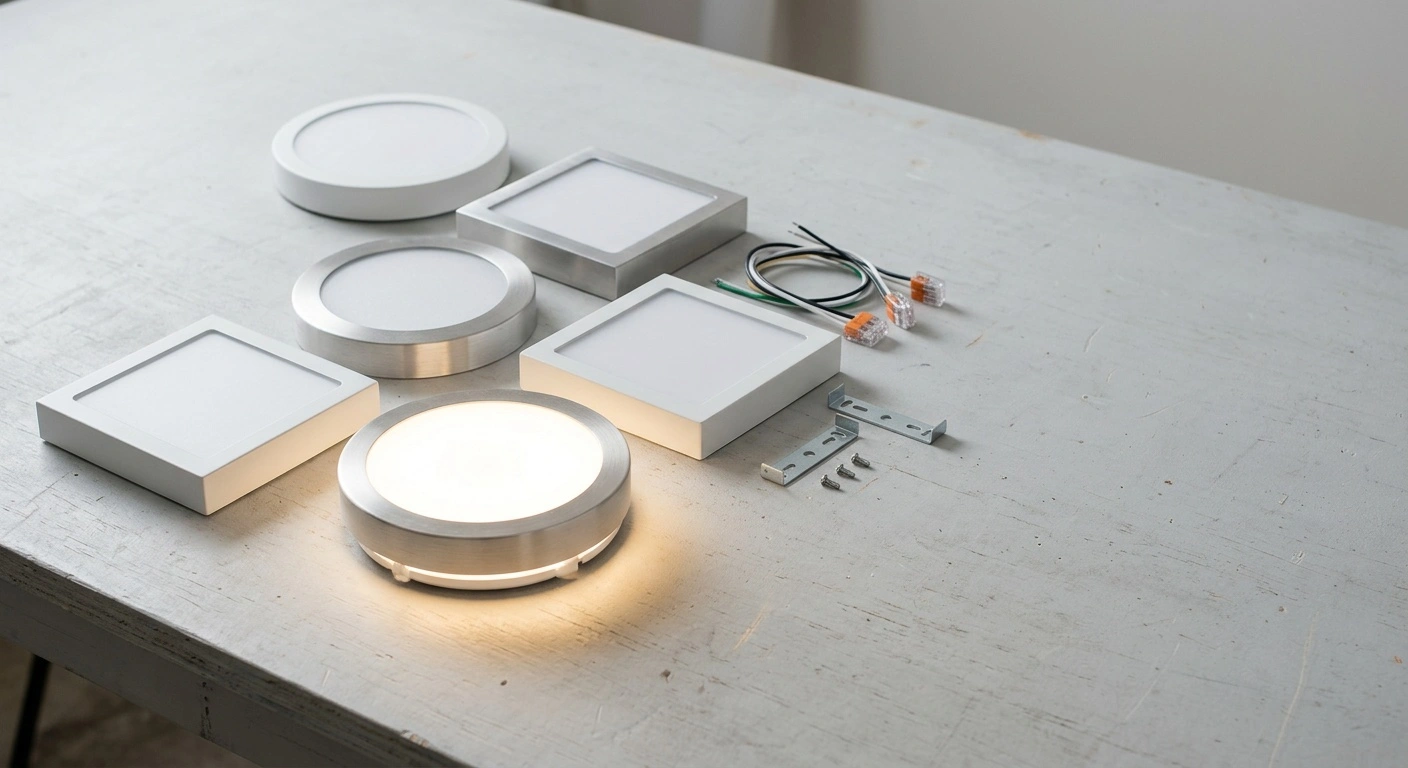
A surface mount fixture houses the LED module, driver, lens, and trim in one compact unit. Most models connect to a standard junction box, while some use conduit or direct wiring.
Unlike recessed lights, these fixtures sit below the finished surface. This design avoids cutting large ceiling openings or working around shallow joist cavities, ductwork, and insulation.
Where Surface Mount Fixtures Work Well
These lights suit rooms with concrete ceilings, limited plenum space, or existing junction boxes. Common locations include kitchens, hallways, closets, laundry rooms, garages, stairwells, and covered entries.
Low-profile round fixtures can replace basic dome lights without drawing much attention. Linear models work well above workbenches, storage aisles, and counters where even coverage matters.
Check the fixture’s location rating before installing it in a bathroom or outdoor area. Damp-rated products handle moisture, while wet-rated fixtures can tolerate direct water exposure.
Key Specifications to Compare
Light Output
Compare lumens rather than wattage when judging brightness. A fixture that produces 1,500 lumens will deliver similar output regardless of its power draw.
Room size, ceiling height, wall color, and fixture spacing all affect the result. Work areas usually need more light than corridors or storage rooms.
Color Temperature
Color temperature describes whether white light appears warm or cool. Fixtures around 2700K resemble incandescent lamps, while 3000K offers a slightly cleaner appearance.
Values between 3500K and 4000K suit offices, garages, and task areas. Cooler 5000K light can feel harsh in living spaces but may help in workshops.
Color Rendering
The color rendering index indicates how accurately a light source reveals colors. Choose a CRI of at least 80 for general use and 90 or higher for kitchens, bathrooms, studios, and retail displays.
Dimming and Controls
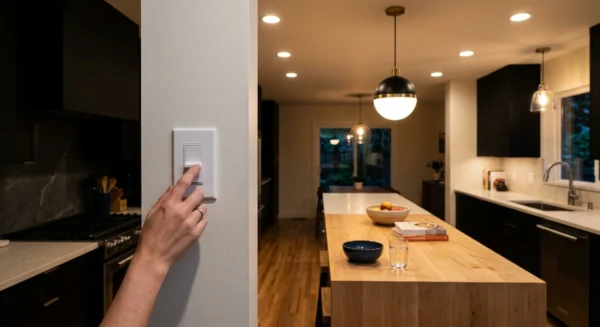
Confirm that the fixture supports dimming before pairing it with a wall dimmer. The manufacturer should provide a compatibility list because mismatched controls can cause flicker, buzzing, or limited dimming range.
Some fixtures include motion sensors, daylight sensors, or selectable wattage settings. Others connect to smart switches, but enclosed electronic controls may require a neutral wire.
Choosing the Right Size and Shape
Match the fixture diameter to the junction box, room scale, and required light spread. Compact units suit closets and narrow halls, while larger fixtures soften brightness across wider areas.
Round models resemble traditional ceiling lights. Square and linear designs create cleaner sight lines in offices, kitchens, and commercial rooms.
Before buying led surface mount lighting, check the fixture depth as well as its width. Cabinet doors, ceiling beams, pipes, and wall-mounted equipment can interfere with a fixture that projects farther than expected.
Installation and Safety Checks
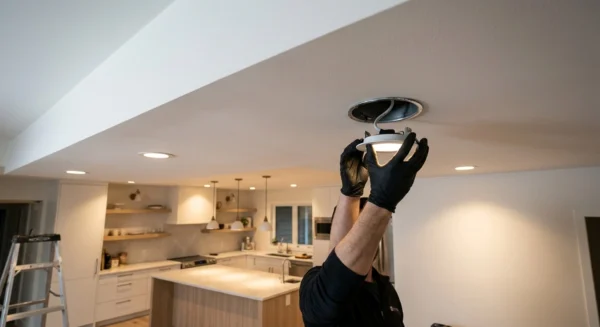
Turn off the circuit at the breaker and verify the power with a suitable tester. Secure the mounting plate to an approved electrical box or to the support method specified by the manufacturer.
Do not rely on drywall alone unless the fixture instructions expressly allow it. Larger commercial units may require anchors, structural fasteners, or suspension hardware.
Keep insulation clear when the product label requires clearance. Follow local electrical codes, and hire a licensed electrician if the wiring, box support, or circuit condition remains uncertain.
Maintenance and Service Life
Integrated LED fixtures have no replaceable bulb. When the driver or LED board fails, the owner may need to replace the complete unit unless the manufacturer sells service parts.
Heat shortens component life, so avoid installing indoor fixtures in hot, enclosed locations. Dust the lens periodically because buildup reduces output and creates uneven patches of light.
Look for a clear warranty and a rated life from an established testing method. Also check for recognized safety certification, such as UL or ETL listing in the United States.
Planning a Reliable Surface Mount Lighting Layout
Start with the room’s dimensions and its main tasks. Then compare lumen output, beam spread, color temperature, CRI, and control compatibility.
Space fixtures evenly, but adjust the pattern around counters, desks, shelving, and other work zones. A simple lighting calculation can prevent dark corners and excessive brightness.
Well-specified led surface mount lighting offers a practical answer for shallow ceilings and straightforward retrofit work. Careful product selection will produce steadier light, cleaner installation, and fewer control problems.