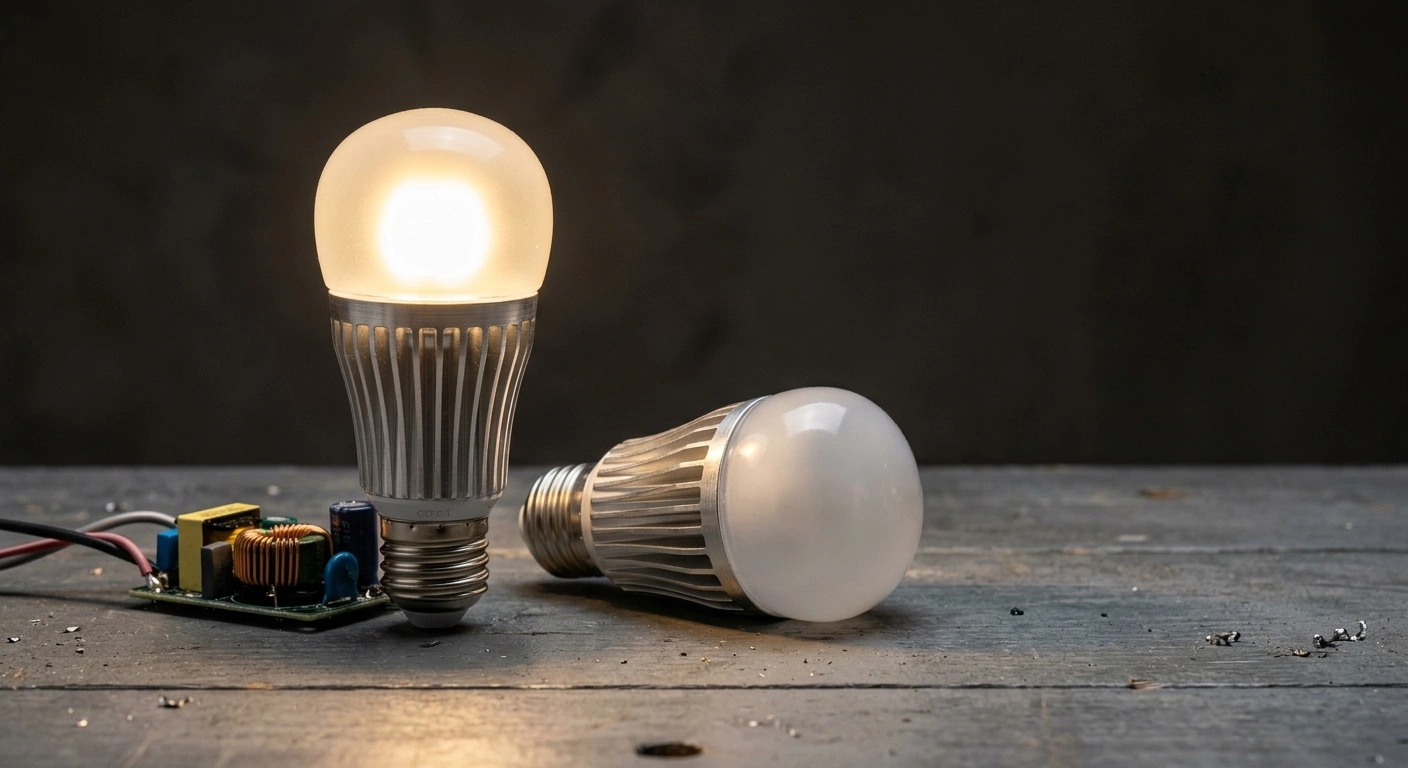
The question “how long do led lights last” has two answers: rated life and actual service life. Most household LED bulbs carry ratings between 15,000 and 50,000 hours. Heat, electrical conditions, and product quality determine whether they reach that mark.
How long do led lights last in everyday use?
A quality household LED commonly runs for 25,000 hours or more. At three hours per day, a 25,000-hour bulb could provide about 22 years of use. Running the same bulb for eight hours daily reduces that estimate to roughly eight and a half years.
| Rated life | 3 hours per day | 8 hours per day | 12 hours per day |
|---|---|---|---|
| 15,000 hours | About 14 years | About 5 years | About 3.4 years |
| 25,000 hours | About 22 years | About 8.5 years | About 5.7 years |
| 50,000 hours | About 45 years | About 17 years | About 11 years |
These figures come from dividing the rated hours by daily use. They do not guarantee a specific replacement date. Real fixtures expose LEDs to heat, voltage changes, and repeated switching.
What an LED lifespan rating means
LEDs usually fade over time instead of failing like traditional incandescent bulbs. Manufacturers often measure useful life with an L70 rating. L70 marks the point when the LED produces 70 percent of its original light output.
A bulb may still work after reaching L70, but the room can look noticeably dimmer. Color may also shift as components age. For that reason, useful life does not always end with a dead bulb.
Rated life is not the same as a warranty
A 25,000-hour rating describes expected performance under test conditions. It does not promise that every bulb will operate for 25,000 hours. Manufacturing differences and installation conditions can shorten or extend service life.
Check the warranty separately. Many manufacturers offer warranties based on years, daily operating hours, or both. Keep the receipt if you install costly bulbs or integrated fixtures.
What shortens the life of LED lights?
Excess heat
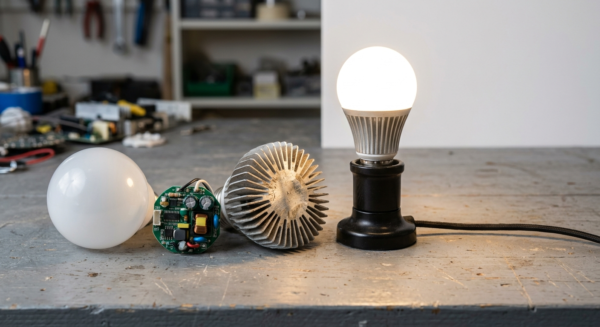
Heat causes many early LED failures. The LED chips create less heat than incandescent filaments, but their electronics still need cooling. A heat sink moves that heat away from sensitive parts.
Enclosed fixtures can trap hot air around a bulb. Use bulbs that carry an enclosed-fixture rating in these locations. Recessed cans and insulated ceilings also require products designed for those conditions.
Poor-quality drivers
An LED driver converts household power into the current that the light needs. Cheap or undersized drivers often fail before the LED chips wear out. Flickering, delayed starts, and random shutoffs can signal driver trouble.
Integrated fixtures create a practical problem if the driver fails. You may need to replace the entire fixture instead of one bulb. Before buying, check whether the manufacturer sells replacement drivers or light modules.
Voltage fluctuations
Power surges and unstable voltage can damage LED electronics. Large appliances may also cause brief changes on a shared circuit. A surge protector can help with plug-in lamps, while whole-home protection covers more circuits.
Persistent flickering needs closer attention. First, test the bulb in another compatible fixture. Contact an electrician if several lights flicker or if switches feel hot.
Incompatible dimmer switches
Older dimmers often expect the higher electrical load of incandescent bulbs. Pairing them with LEDs can cause buzzing, flickering, or a limited dimming range. It can also place extra stress on the bulb’s driver.
Choose dimmable LED bulbs and an LED-compatible dimmer. The dimmer manufacturer may publish a list of tested bulbs. That list offers a useful starting point for larger installations.
Frequent switching
Switching affects LEDs less than fluorescent lamps, but poor electronics can still suffer under heavy cycling. Motion sensors, stairwells, and bathrooms may create frequent on-and-off cycles. Select bulbs that list high switching-cycle performance for these areas.
Do smart LEDs last as long as standard LEDs?
Smart bulbs often use LED chips with ratings similar to standard bulbs. However, they contain radios, processors, and extra power-management parts. Any of those components can fail before the light source reaches its rated life.
Smart bulbs also draw a small amount of power while waiting for commands. Good ventilation remains important, especially in compact lamps. Avoid placing a smart bulb in an enclosed fixture unless its label allows that use.
LED bulbs compared with other light sources
LEDs generally outlast incandescent and halogen bulbs by a wide margin. They also use less electricity for the same light output. Compact fluorescent lamps can last longer than incandescent bulbs, but frequent switching may shorten their life.
| Light source | Typical rated lifespan |
|---|---|
| Incandescent | About 1,000 hours |
| Halogen | About 2,000 to 4,000 hours |
| Compact fluorescent | About 8,000 to 15,000 hours |
| Household LED | About 15,000 to 50,000 hours |
Product design and operating conditions can move these numbers in either direction. Compare rated life, warranty terms, and tested light output before buying. Price alone does not predict longevity.
How to help LED lights last longer
- Use bulbs approved for enclosed fixtures where heat can build up.
- Match dimmable bulbs with LED-compatible dimmer switches.
- Stay within the fixture’s listed wattage and bulb requirements.
- Keep vents, heat sinks, and fixture openings free of dust.
- Choose outdoor bulbs with the correct damp-location or wet-location rating.
- Buy products with clear specifications and a useful warranty.
- Protect sensitive lighting from major power surges.
Installation matters as much as the bulb itself. Do not place indoor-only LEDs in exposed outdoor fittings. Moisture can corrode contacts and damage the driver.
Signs that an LED needs replacement
Replace an LED if it flickers after you rule out the switch and socket. Buzzing, intermittent shutoffs, and severe color changes also point to a failing bulb. Discoloration around the base may indicate excess heat.
Turn off power before inspecting a fixture. Stop using any lamp with melted plastic, a burned smell, or damaged wiring. An electrician should inspect repeated failures in the same location.
Choosing LEDs for dependable service
A practical answer to “how long do led lights last” depends on the bulb, fixture, and operating environment. Look for a realistic hour rating, clear usage restrictions, and solid warranty coverage. Then match the product to the fixture rather than choosing by brightness alone.
Well-made LEDs can provide years of steady light with little maintenance. Good ventilation and compatible controls help them reach their expected lifespan. Those details matter most in fixtures that run for many hours each day.