How long will LED lights last in normal use? Most LED bulbs carry rated lifespans between 15,000 and 50,000 hours. Actual service life depends on heat, daily use, fixture design, and component quality.
A bulb rated for 25,000 hours could run for more than 22 years at three hours per day. However, that figure represents a laboratory estimate rather than a guaranteed replacement date.
How Long Will LED Lights Last in Real-World Use?
Residential LED bulbs commonly last between 10 and 20 years under typical household conditions. Bulbs that run eight or more hours each day will reach their rated lifespan much sooner.
Commercial LED fixtures may carry ratings of 50,000 to 100,000 hours. Manufacturers design these products for longer operating periods and often use larger heat sinks and higher-quality drivers.
| Rated lifespan | 3 hours per day | 8 hours per day | 12 hours per day |
|---|---|---|---|
| 15,000 hours | 13.7 years | 5.1 years | 3.4 years |
| 25,000 hours | 22.8 years | 8.6 years | 5.7 years |
| 50,000 hours | 45.7 years | 17.1 years | 11.4 years |
These calculations divide the rated hours by daily use and 365 days. They do not account for excess heat, voltage problems, or early driver failure.
What an LED Lifespan Rating Means
LEDs usually fade over time instead of burning out without warning. Manufacturers often measure lifespan at the point when light output falls to 70 percent of its original level. The lighting industry calls this an L70 rating.
An LED can continue working after it reaches L70, but the room may look noticeably dimmer. Color can also shift as the diode and internal components age.
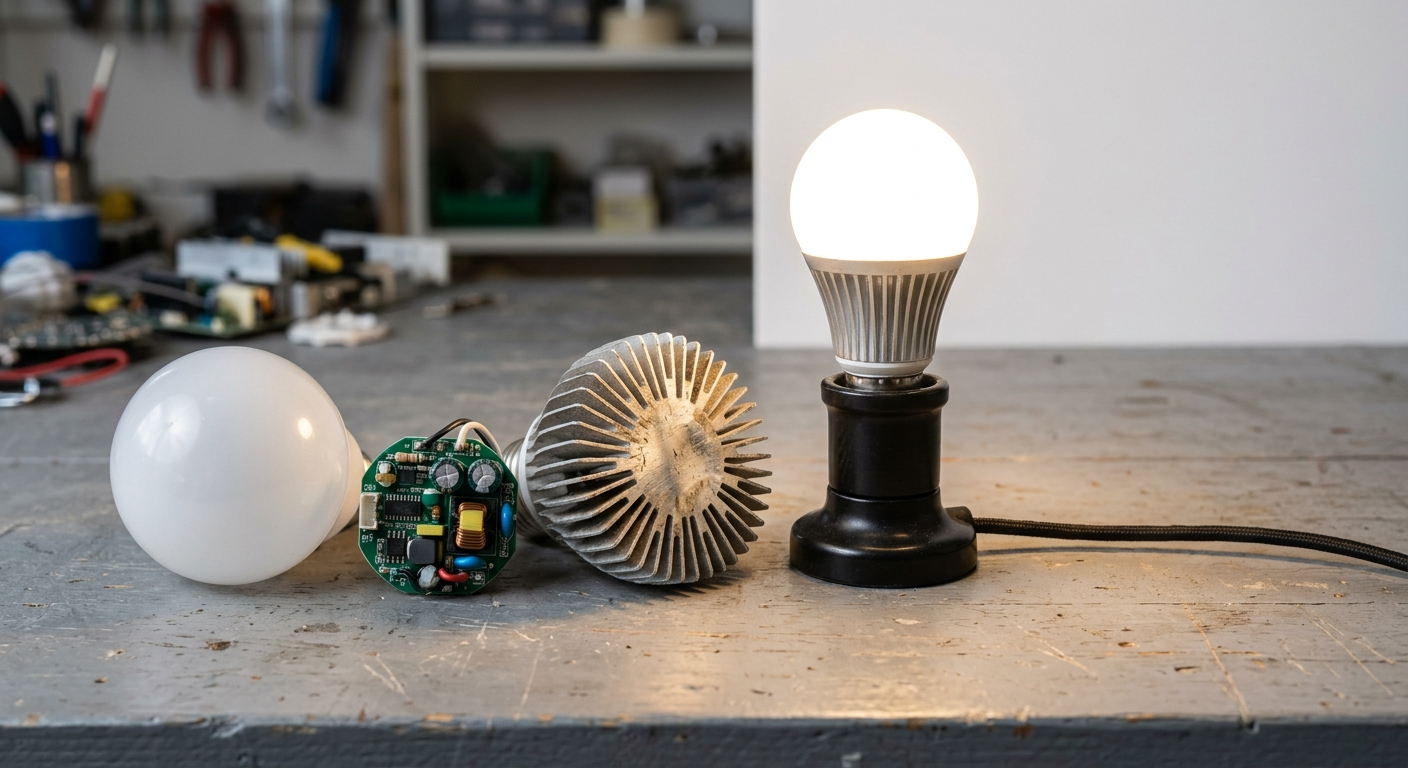
The LED chips are only part of the system. The electronic driver converts household current into power the chips can use. In many bulbs and fixtures, the driver fails before the diodes reach their rated lifespan.
Factors That Shorten LED Life
Heat Buildup
Heat causes more LED failures than most other operating conditions. Although LEDs produce less heat than incandescent bulbs, their electronic parts still need ventilation.
Enclosed fixtures can trap heat around the bulb and driver. Choose an LED labeled for enclosed fixtures if the shade or housing restricts airflow. Recessed fixtures also need compatible bulbs and adequate heat management.
Daily Operating Time
A light that runs all night uses its rated hours faster than a hallway bulb. Outdoor security lights, shop fixtures, and commercial signs often accumulate thousands of hours each year.
Calculate expected life with a simple formula: rated hours divided by daily operating hours, then divided by 365. Treat the result as an estimate rather than a firm deadline.
Driver and Component Quality
Low-cost bulbs may use drivers, capacitors, and solder joints that wear out early. A long hour rating means little if the supporting electronics cannot handle regular heat and voltage changes.
Look for established manufacturers, independent safety certifications, and clear warranty terms. A five-year warranty offers more practical protection than a lifespan claim by itself.
Dimmer Compatibility
An incompatible dimmer can cause flickering, buzzing, poor low-level performance, or early failure. Use dimmable LED bulbs with a dimmer that supports LED loads.
Older dimmers often expect the higher electrical load of incandescent bulbs. Replacing them with LED-compatible controls can improve performance and reduce stress on the driver.
Voltage Fluctuations
Power surges and unstable voltage can damage LED electronics. Outdoor circuits, workshops, and older buildings may face a higher risk of electrical variation.
A surge protector can help protect plug-in lamps and connected lighting systems. An electrician should inspect frequent failures on the same circuit.
LED Bulbs Compared With Other Light Sources
LEDs generally outlast incandescent, halogen, and compact fluorescent lamps. They also use less electricity for the same approximate light output.
- Incandescent bulbs: About 1,000 hours
- Halogen bulbs: About 2,000 to 4,000 hours
- Compact fluorescent lamps: About 8,000 to 15,000 hours
- LED bulbs: About 15,000 to 50,000 hours
Frequent switching can shorten the life of some fluorescent lamps. LEDs handle normal switching better, although poor drivers may still fail after repeated electrical stress.
Signs an LED Bulb Needs Replacement
Visible dimming often signals normal lumen depreciation. Flickering, delayed startup, buzzing, and intermittent operation can point to driver trouble or a loose connection.
First, turn off the power and check that the bulb sits firmly in the socket. Test the bulb in another compatible fixture if the problem continues. Persistent flickering across several lights may require an electrician.
Replace bulbs that show discoloration, cracked housings, scorch marks, or unusual heat. Stop using any fixture that smells burned or repeatedly trips a breaker.
How to Help LED Lights Last Longer
- Use bulbs rated for enclosed, damp, or wet locations where required.
- Keep insulation and debris away from fixtures that need ventilation.
- Match dimmable bulbs with LED-compatible dimmers.
- Choose the correct voltage and base type for each fixture.
- Avoid exceeding the fixture’s maximum wattage rating.
- Buy products with recognized safety certifications and useful warranties.
Do not choose a bulb by wattage alone. Compare lumens for brightness, then check color temperature, fixture compatibility, and operating limits.
A Practical Estimate for LED Service Life
The answer to how long will LED lights last depends on the bulb, fixture, and operating environment. A quality household LED can provide 15,000 to 50,000 hours of useful light.
For most homes, that equals many years of service. Good ventilation, stable power, and compatible controls give the bulb the best chance of reaching its rated life.